What Is Printify and How Does It Work?
What is Printify? Learn how Printify works for selling merchandise and for personal projects, from its pricing plans and free options to its global fulfillment network.
· UPDATED · 9 MIN

Many people encounter Printify when searching for ways to launch a t-shirt business or sell custom merchandise online. While that is its primary purpose, it is not the complete picture. At its core, Printify is a print-on-demand platform, but with a distinct operational model: it does not own printing facilities or handle production itself. Instead, it acts as a software bridge, connecting entrepreneurs and creators to a vast, global network of independent print providers.
This structure offers significant flexibility, but it also introduces unique trade-offs. This article will explain precisely what Printify is and how it functions. We will cover its core model for e-commerce sellers, break down its pricing structure, and detail how it can be used for non-commercial purposes, such as ordering a single sample or creating custom gifts for a small group. By the end, you will have a clear understanding of its capabilities and whether it aligns with your specific needs.
How Does Printify Work for E-commerce Sellers?
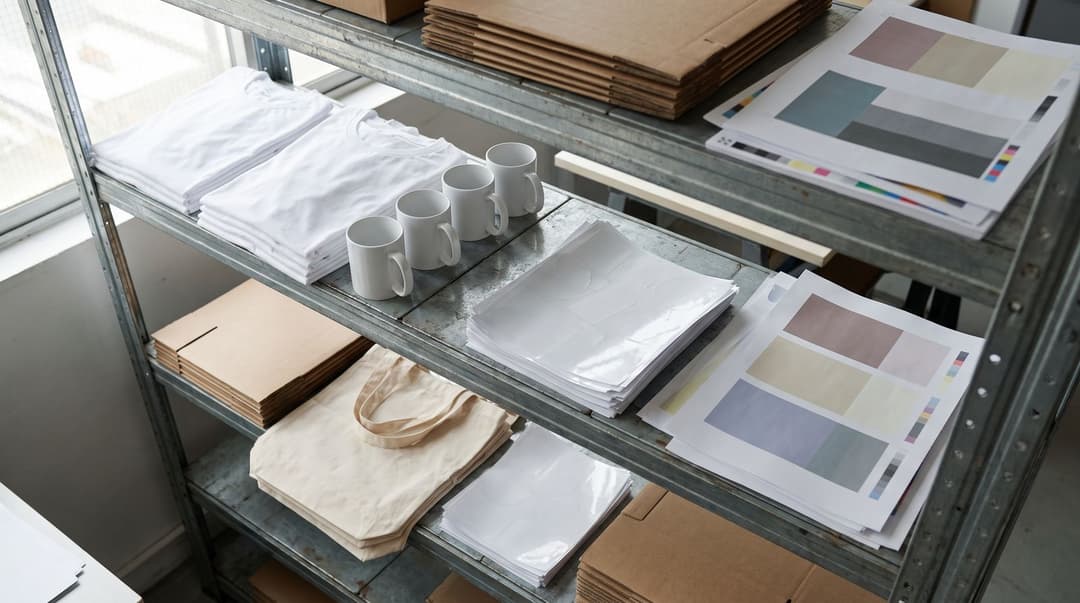
For online merchants, Printify serves as the logistical backbone for a print-on-demand business, automating the process from sale to shipment. The platform itself is a software layer that integrates with an e-commerce store and routes orders to a chosen manufacturing partner. The typical workflow follows a clear, hands-off sequence.
A seller begins by creating a Printify account and connecting it to their online storefront, such as a Shopify, Etsy, or WooCommerce store. Printify's Shopify app alone holds a 4.7 rating across several thousand merchant reviews, which gives some sense of how established the integration route is. Next, they browse Printify’s extensive product catalog, which includes apparel, home goods, and accessories from dozens of different suppliers. For any given product, like a heavyweight cotton t-shirt, there may be several print providers offering it at different price points, from different locations, and with varying color options. The seller chooses both the product and the specific provider they want to use.
Once a product is selected, the seller uploads their artwork using Printify’s Mockup Generator. This tool allows them to position the design on the product and generate realistic images for their store listings. After publishing the product, it appears on their e-commerce site just like any other item, available for customers to purchase.
When a customer buys the product, the automation begins. The order information is sent automatically from the seller's store to Printify. Printify then routes the order details, including the design file and shipping address, to the pre-selected print provider. That provider then handles the entire fulfillment process: printing the design onto the product, packing it, and shipping it directly to the customer under the seller's brand. The seller is charged the base cost of the item and shipping, and their profit is the difference between this cost and the retail price they set.
Sellers on marketplaces should note that this arrangement carries disclosure obligations. Etsy, for instance, requires sellers to declare their print provider as a production partner in their shop settings, while remaining the original designer of the artwork.
The key trade-off in this model lies in its structure. By connecting to a large network, Printify offers a wide product range and competitive pricing. However, this also means that quality, fulfillment time, and even packaging can vary from one provider to another. That variability has a practical consequence for the seller, who remains responsible to the customer for delivery regardless of which provider is printing. In the US, the FTC's prompt delivery rules require sellers to ship within the advertised window, or within 30 days if none is stated, so provider fulfillment times need to be reflected in the shipping estimates shown at checkout.
Can You Use Printify for Personal Projects?
While Printify is built for e-commerce, a significant and often overlooked feature is its utility for personal, non-commercial projects. You do not need an integrated online store to use the platform. This opens it up for anyone wanting to create custom items for themselves, as gifts, or for specific events. This is primarily accomplished through the platform's manual order functionality.
Ordering Samples
For anyone considering selling products, ordering samples is a critical step. It allows you to assess the physical item, the print quality of your design, the color accuracy, and the overall feel before offering it to customers. On Printify, you can order a sample of any product you create without listing it for sale. The process involves a manual order through your Printify account. You create the product in the Mockup Generator as usual, save it, and then instead of publishing it to a store, you select the option to create a new order manually. You can then enter your own shipping details and pay for the item yourself.
One expectation worth setting: unlike some competitors, Printify does not discount sample orders. Samples are charged at standard base cost plus shipping. Premium subscribers pay the lower base prices their plan already gives them, but there is no additional sample-specific discount on top.
One-Off Custom Items
The same manual order process can be used to create single, personalized items for yourself. If you have a unique design you want on a hoodie, a favorite photo for a phone case, or a specific quote for a coffee mug, you can use Printify as a personal design tool. There is no minimum order quantity. You can upload your design, place it on the product of your choice, and order just one. This is a practical way to create high-quality, custom products without the complexity or cost associated with traditional screen printing or bulk ordering services.
Custom Gifts and Small-Batch Orders
Printify is also a valuable resource for creating custom items for small groups or events. For example, a user could design and order 15 matching t-shirts for a family reunion, 10 custom tote bags for a company retreat, or 6 personalized mugs for a wedding party. Because each order is printed on demand, there is no need to commit to a large inventory. You can order the exact quantity you need. This flexibility makes it a strong choice for situations where you want professional-quality custom goods without the overhead and commitment of a bulk order from a traditional print shop.
Understanding Printify's Pricing and Plans

One of the most common questions from new users is whether Printify is free to use and how its costs are structured. The platform operates on a freemium model, offering both a free plan and a paid subscription. Understanding the differences, along with how product costs are calculated, is essential for determining its value for your specific needs.
The Free Plan
Printify offers a robust Free plan that is sufficient for many new sellers and personal-use cases. With this plan, you can create an account, design products, and connect up to five online stores without any monthly fee. You only pay for the products and shipping when a customer places an order. There are no hidden charges or transaction fees from Printify itself. The Free plan provides full access to the product catalog and the entire network of print providers. For someone just starting out, or for anyone using the platform for occasional personal orders, the Free plan provides all the necessary functionality.
Printify Premium
For sellers with consistent sales volume, the Printify Premium plan is worth considering. It costs $39 per month billed monthly, or $24.99 per month when billed annually, and offers a significant benefit: a discount of up to 20% on the base cost of most products in the catalog (checked October 2026). The trade-off is straightforward: you pay a monthly fee in exchange for a lower per-item cost. This can substantially increase profit margins for a business that sells dozens or hundreds of items per month, quickly offsetting the subscription cost. Premium also raises the number of connected stores from five to ten, making it suitable for businesses that sell across multiple e-commerce platforms. Printify outlines the differences on its official pricing page.
How You Are Charged
Regardless of the plan, the cost of an item is broken down into three parts: the Base Cost, the Shipping Cost, and your Retail Price. It is crucial to understand how these elements combine to determine your profit margin.
- Base Cost: This is what the print provider charges you to produce the item. It includes the blank product and the printing service. This cost varies by provider.
- Shipping Cost: This is the fee charged by the provider to ship the item to the customer. This also varies by provider and the customer's location.
- Retail Price: This is the price you set in your store for the end customer to pay.
Your profit is the Retail Price minus the Base Cost and Shipping Cost. For example, if a t-shirt has a base cost of $12, shipping is $5, and you set a retail price of $30 in your store, your profit on that sale is $13 ($30 - $12 - $5). Our full Printify review goes into greater detail on this topic.
The Printify Fulfillment Network: Where Products Ship From

A fundamental aspect of Printify’s model is that it is not a centralized manufacturer. Products do not ship from a Printify warehouse, because none exists. Instead, every item ships directly from the independent print provider that the seller selects for that specific product. This distributed network has important implications for shipping, strategy, and brand consistency.
Because you can choose from dozens of providers located all over the world, you can make strategic decisions to improve the customer experience. For instance, if your primary market is in the United Kingdom, you can select a UK-based print provider. This reduces shipping times and costs for your UK customers compared to using a provider based in North America or mainland Europe. That choice is worth more than it might appear: Baymard Institute's checkout research finds that 21% of shoppers abandon a purchase because delivery is too slow. Each provider has its own shipping rates and fulfillment times, which are clearly displayed when you are selecting a product. This allows a seller to build a fulfillment strategy tailored to their audience.
The core trade-off of this model is flexibility versus consistency. The global network provides access to a wider variety of products and the ability to optimize shipping routes. However, it also means that if you sell two different products from two different providers, a customer who orders both will receive them in separate packages at different times. Vetting providers through sample orders and performance ratings is therefore part of the job rather than an optional extra. For sellers who prioritize consistency and in-house fulfillment over the breadth of a supplier network, an alternative like Printful is worth considering.
Verdict
So, what is Printify? It is a highly flexible print-on-demand platform that functions as a network, connecting sellers to a wide array of global print providers. While it is primarily engineered for e-commerce entrepreneurs looking to sell custom merchandise with minimal upfront investment, its manual ordering system makes it equally accessible for personal projects, one-off gifts, and sample testing.
Its main value proposition is choice. No other platform offers the same breadth of products and suppliers, which allows sellers to fine-tune their catalog and optimize shipping for their target audience. The trade-off for this flexibility is a greater responsibility on the seller to manage quality and consistency by carefully selecting and vetting their print partners.
On balance, Printify is a powerful and versatile tool. Whether you are building a global brand from scratch or simply want to put a custom design on a single coffee mug, its model provides an effective and scalable solution.
FAQ
Do I need a website to use Printify?
No, you can use Printify to create and order items for yourself without connecting an e-commerce store.
Does Printify handle customer service?
Printify provides support for issues related to production or printing errors, but you are responsible for your own store's customer service.
Can I sell Printify products in a physical store?
Yes, you can place manual orders for any quantity of items and have them shipped to you to sell in person.
Who pays for shipping on Printify?
The seller pays Printify for the base cost and shipping; this is then typically covered by the retail price the end customer pays in your store.
Keep reading
- Is Printful Just for Selling Merch? A Look at All Its Uses
Learn how Printful works for more than just merch. We explore its uses for online sellers, personal one-off orders, and corporate needs to see if it's right for you.
- Printify vs. Spring (Teespring): Which Is Better for Creators?
Choosing between Printify vs Teespring (now Spring)? We compare the supplier and marketplace models on pricing, integrations, and branding to help you decide.
- Gooten vs Printify: Which Is Better?
Weighing Gooten vs Printify? See how curated automation stacks up against an open marketplace on quality, cost, and catalog before you pick a partner.