Tapstitch Review: How It Compares With Printful and Printify
An honest Tapstitch review for streetwear sellers: heavyweight blanks and prices, printing and custom labels, shipping from China and Los Angeles, fees, and where Printful or Printify fits better.
BY POD PLATFORM REVIEW EDITORIAL TEAM · · UPDATED · 9 MIN
FIGURES CHECKED NOVEMBER 2026
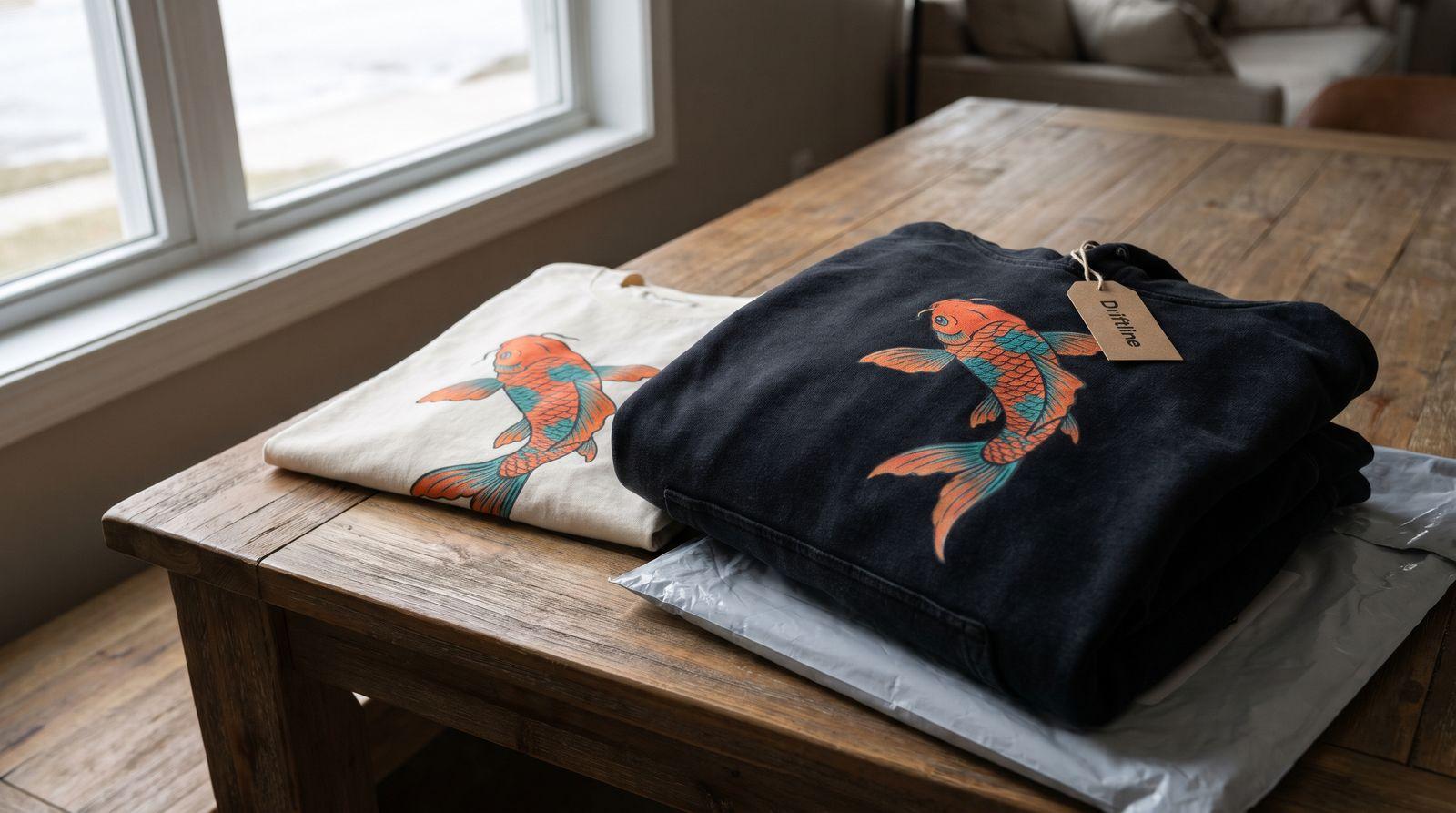
Our score for Tapstitch
3.0 / 5
A clothing manufacturer that dropships: heavyweight streetwear blanks at fair prices, slow delivery outside the US and nothing beyond apparel.
- Pricing
- 4/5
- Free to install with no paid plan, and product prices are public; label and tag prices only appear in the order flow, and there is no volume discount.
- Product range
- 2/5
- Apparel only: tees, hoodies, sweatshirts, sportswear and a kids range, with most blanks stopping at 2XL.
- Print quality
- 4/5
- Printed in its own facilities on heavyweight blanks, with strong store-owner ratings from a modest number of reviews; defects and order errors are covered.
- Shipping
- 3/5
- Production takes a few days, but most of the catalog ships from China; only unlabelled bestsellers are made in Los Angeles.
- Integrations
- 2/5
- Shopify and WooCommerce, or manual orders without a store; no Etsy or other marketplace connection is listed.
Each criterion is scored from 1 to 5 and the overall score is their average. How we score platforms.
Tapstitch is the supplier people mention when the question is not "which print-on-demand platform" but "which one makes a hoodie that feels like a streetwear brand's hoodie". It is a manufacturer first, with its own catalog of heavy fleece and thick cotton blanks and a dropshipping integration on top. This review covers what Tapstitch is, the blanks and what they cost, printing and branding, shipping and production, fees, and the comparison most people searching "Tapstitch reviews" actually want: whether it beats Printful or Printify for a clothing brand.
The Verdict
Tapstitch is the right supplier for a seller whose product is the garment: an oversized 350 gsm hoodie or a boxy heavyweight tee with a custom neck label and a hang tag, sold as a brand rather than as merch. The blanks are the point and the prices for that weight are competitive. The trade-offs are structural. Most of the catalog is made and shipped from China with a US line for bestsellers, so delivery is slower than from a domestic printer. Sizes on most blanks stop at 2XL. There is no sample programme, no returns handling for your customers and nothing beyond apparel. If you sell tees, hoodies and mugs to an audience that wants them fast, Printful or Printify remains the easier choice; if the fabric is the pitch, Tapstitch is worth the longer wait.
What Tapstitch Is
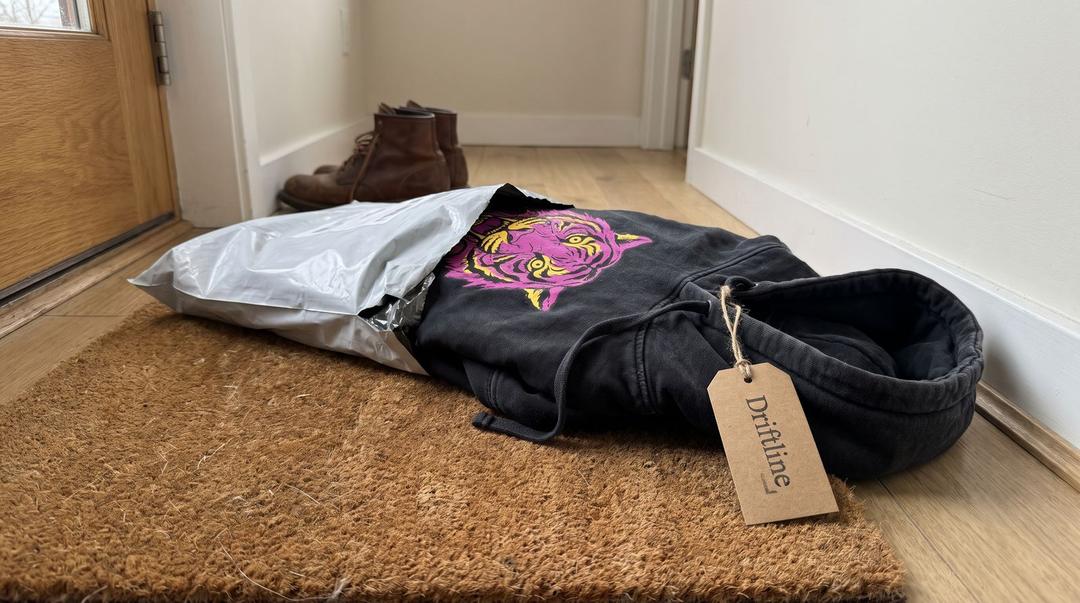
Tapstitch's homepage describes the business as premium clothing print on demand and dropshipping with no minimum order quantities, and says its production facilities run automated folding and bagging, that it prints direct to garment on Brother and Kornit machines with water-based inks, that it also offers direct-to-film transfers, and that it ships bestselling items from Los Angeles for US fulfilment with the full collection made at its international facilities. The same page says customers will not see Tapstitch's name on anything they receive, and that custom neck labels, hang tags and insert cards can be added to orders.
The shape, then, is a factory with a storefront integration, not a marketplace of printers like Printify or a network of fulfilment centres like Printful. You connect a Shopify or WooCommerce store, pick blanks, upload artwork, and Tapstitch makes and ships the order. You can also order without a store, which is how most sellers check quality before listing.
The Blanks: Weights, Fits and Prices
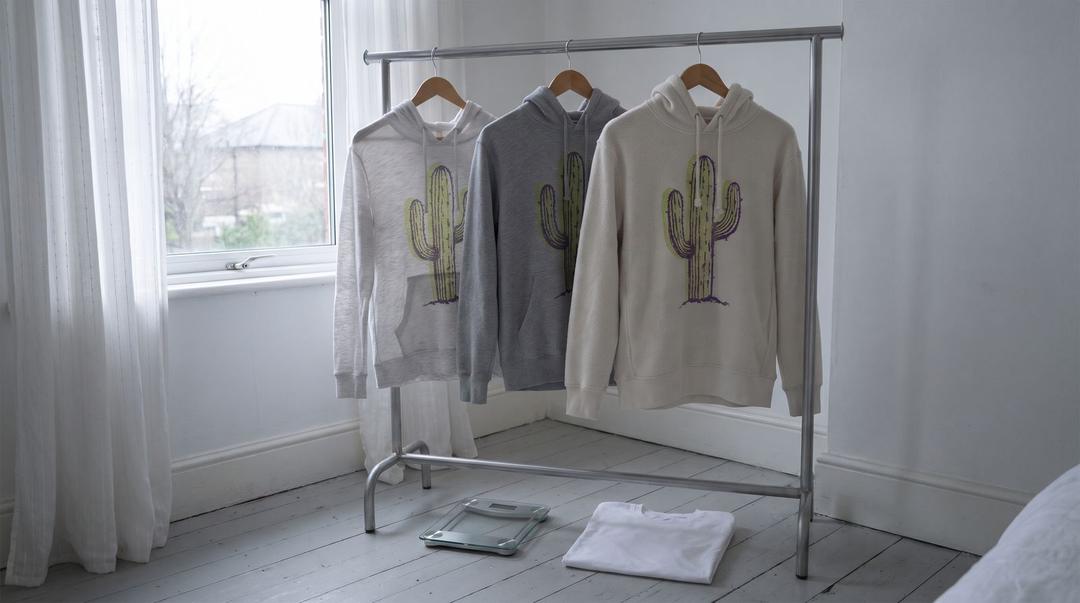
This is where Tapstitch earns its reputation. Every product is listed with its fabric weight in grams per square metre and ounces, which the big suppliers rarely put in the product title. Fabric weight is mass per unit area, the quantity defined by ASTM D3776, the standard test method for the mass per unit area of fabric, and a heavier number means a thicker, denser fleece or jersey. A standard print-on-demand tee sits well under 200 gsm. Tapstitch's catalog starts above that.
Tapstitch's custom hoodies page lists blanks from 340 to 430 gsm, in unisex sizes S to 2XL, at prices from $14.92 for the Oversize Fleeced Hoodie in 24 colours up to $28.99 for a 410 gsm style in a single colour, with most of the range between $17.99 and $25.99. Tapstitch's custom t-shirts page runs from a 250 gsm essential cotton tee at $9.99 to a 430 gsm heavyweight boxy tee at $17.99, with mineral-wash and waffle styles in between, and a couple of styles going to 3XL. Those are "from" prices; branding extras and shipping are on top.
Two things to notice. The weights are genuinely streetwear-grade, and the oversized and boxy cuts are the fits that sell in that market. And the size range is narrow: S to 2XL on almost everything, where the standard blanks at the big suppliers go well beyond that.
Printing, Labels and Branding
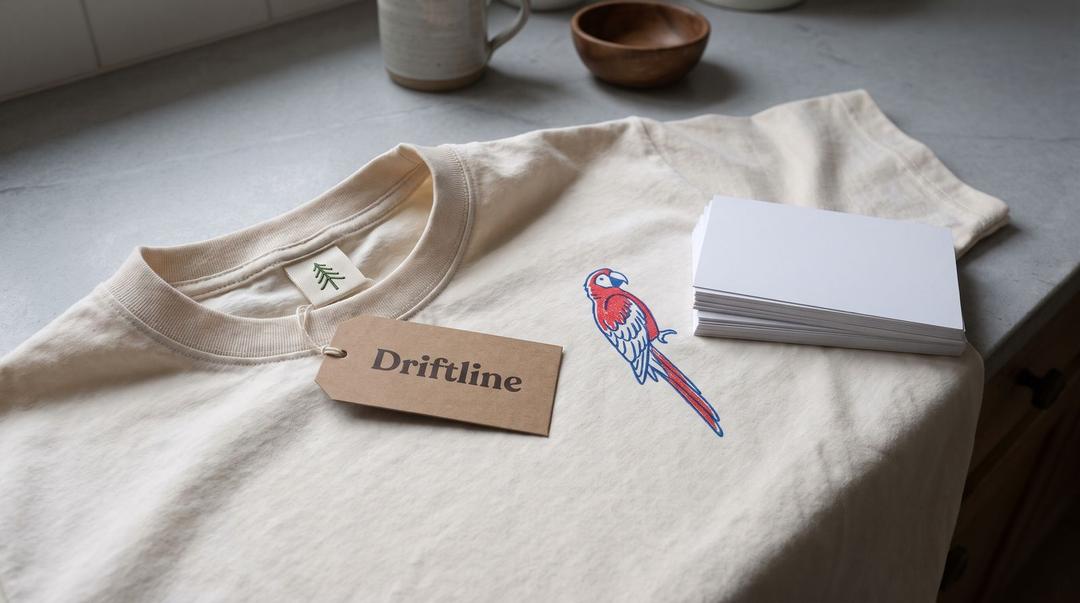
Printing is direct to garment on Brother and Kornit machines, with direct to film for the designs and fabrics that suit it, as the homepage above states: the same two methods the large suppliers use, on heavier fabric.
The branding options are the reason a clothing brand picks Tapstitch over a general supplier. Custom neck labels, hang tags and insert cards are available as paid add-ons, and the garment ships with no mention of Tapstitch. Before you design a label for the US market, note that the federal textile labelling rule requires the label to carry the generic fibre names and percentages by weight and the name or registered identification number of the manufacturer or the business marketing the product, set out clearly and legibly. A label that is only your logo does not meet that, so keep fibre content and a legal name on it alongside the brand.
One limit to know before you plan around the Los Angeles line: Tapstitch's product labeling guide says custom labels are only available with international fulfilment, so a labelled garment cannot take the faster US route.
Shipping and Production Times
Tapstitch publishes its shipping expectations and rates in one place, which is more than some suppliers do. Its shipping cost and speed FAQ gives a US Special Line at 5 days on average with 95% delivered in 7, an international Special Line at 10 days average with 95% in 15, a Special Line Pro at 7 days average, International Express at 5 days average, and Standard shipping at 25 days average with 95% in 30. The same page says those times are estimates, not guarantees, and do not include production, and that Standard shipping is only available to the US, Canada and Australia.
The same shipping FAQ gives worked rates for a 250 gram tee: $4.96 for the first item and $2.62 to $2.77 for each additional one from China to the US on the Special Line, and $4.44 plus $0.50 to $2.20 per additional item when the tee is made in the US.
Production time is shown on each product page, not on the help pages. On the page for one of Tapstitch's bestselling tees, the shipping panel showed 1 to 3 days of production for international fulfilment, with the shipping time and an estimated delivery date for the chosen destination next to it. Read that panel on every blank you plan to sell, because it changes with the product and with where the order is made, and add it to the transit times above. Its help centre says an order can be cancelled from the dashboard at any time before it enters production and not after, which is the usual rule. A US customer buying a hoodie made in China is looking at production plus a week or more in transit, slower than a supplier shipping from a US facility. Our shipping times comparison sets the other suppliers' published figures next to these.
Fees and What You Keep
There is no subscription. The Tapstitch app listing on the Shopify App Store describes it as free to install with additional charges that may apply, shows an overall rating of 4.9 from 145 reviews, and lists product prices starting at $4.50. Your cost per order is the product price for the blank and print, any label or tag add-on, and shipping; what you keep is your retail price minus that sum.
That is the same structure as the free plans at the larger suppliers, so the comparison comes down to product price per garment and shipping per order. For a heavyweight hoodie Tapstitch's base price is competitive, because the big suppliers' heavy fleece styles are their premium lines. For a standard tee it is not the cheapest option, and shipping from China widens the gap. Run the sum for your own product in our profit calculator before you set a price.
Tapstitch vs Printful and Printify
Catalog and sizes. Tapstitch sells apparel only: tees, hoodies, sweatshirts, sportswear and a kids range, mostly to 2XL. Printful and Printify sell apparel in a wider size range plus mugs, posters, bags, hats and hundreds of other items. If you ever want a mug next to the hoodie, or a 4XL of it, that decides it.
The garment. Tapstitch wins on fabric weight and streetwear cuts as standard. The big suppliers carry heavyweight and oversized blanks too, but as a minority of a large catalog, and their standard tees are lighter.
Plans and extras. According to Printful's pricing page, the Free plan is $0 a month and the Growth plan is $24.99 a month, takes up to 33% off products and becomes free when your sales reach $12,000 a year; printed inside labels cost $0.99 and outside labels $2.49 per label. Printify follows the same pattern: its pricing page has a Free plan at $0 a month, then Premium, which discounts all products and is priced from $24.99 a month for yearly subscribers and from $39 a month otherwise. Tapstitch has no plan tier; its label and tag prices appear in the order flow rather than on a public page.
Where it ships from. Printful prints in facilities on several continents and routes to the nearest; Printify's print providers are spread across many countries; Tapstitch makes most of its catalog in China with a Los Angeles line for bestsellers. For a European audience it is the slowest of the three.
Samples and returns. Tapstitch has no sample programme but a minimum order of one, so a sample is a single full-price order, and it handles returns only for defects and errors, leaving customer returns to your own policy. Our hoodie supplier comparison covers the heavy-fleece options at the big suppliers if the garment matters but the shipping does not work for you.
Who Tapstitch Suits
- Clothing brands where the blank is the pitch. Oversized heavyweight hoodies and boxy tees, labelled as yours, sold to people who notice fabric.
- Sellers who want custom labels and hang tags from the first order without a minimum run, and who can accept international fulfilment for labelled pieces.
- US-focused stores selling unlabelled bestsellers made in Los Angeles, where the delivery time is reasonable.
Who Should Look Elsewhere
- Stores that sell more than apparel, or to a plus-size audience. There are no mugs or prints, and most blanks stop at 2XL.
- Sellers outside the US whose customers expect delivery in days, not weeks, and US sellers who want a custom label on the faster Los Angeles route.
Conclusion
Tapstitch is a manufacturer that happens to dropship, and that is both its strength and its limit. The garments are heavier, better cut and more brandable than a standard print-on-demand tee, and the pricing is published and competitive for that weight. The cost is time and range: shipping from China, sizes that stop early, and nothing outside clothing. Use it for the pieces where the fabric sells the product; keep a broader supplier for everything else. Check Tapstitch's own product and shipping pages before you set a price, because these figures move.
FAQ
Is Tapstitch legit?
Yes. It is a print-on-demand apparel supplier with its own catalog of heavyweight blanks, a Shopify app with a high average rating from a modest number of reviews, a published shipping table and a help centre. The caveats are the ones that come with its model: most products are made and shipped from China, sizes stop at 2XL on most blanks, and it does not handle returns from your customers.
Is Tapstitch better than Printful?
For the garment, often. Tapstitch's blanks are heavier and cut like streetwear, which is what a fashion-led brand wants and what the big suppliers' standard tees are not. For everything around the garment, Printful is broader: a far larger catalog, more sizes, fulfilment centres on several continents and faster delivery to most of its markets. Many sellers use both for different products.
Does Tapstitch have a monthly fee?
No. Its Shopify app is listed as free to install, and you pay the product price plus shipping on each order, with custom labels and hang tags as paid extras. There are no order minimums, so you can order one piece to check quality before you list anything.
Keep reading
- Fourthwall Review: How It Compares With Other POD Platforms
An honest Fourthwall review: how the shop, catalog and fees work, what you keep, shipping times, the YouTube, Twitch and TikTok integrations, and when a supplier like Printful is the better fit.
- NinjaPOD Review: Is It Better Than Printify?
NinjaPOD reviewed: what Ninja Transfers' DTF-only print-on-demand app does, what it charges, where it ships, how its Shopify-only setup compares with Printify, and who should pick which.
- Tapstitch vs Printify: Fashion Blanks or the Bigger Catalog?
Tapstitch vs Printify for a clothing brand: blank weights and prices, printing and custom labels, shipping times, returns and which one fits your store.