Tapstitch vs Printify: Fashion Blanks or the Bigger Catalog?
Tapstitch vs Printify for a clothing brand: blank weights and prices, printing and custom labels, shipping times, returns and which one fits your store.
BY POD PLATFORM REVIEW EDITORIAL TEAM · · 7 MIN
FIGURES CHECKED NOVEMBER 2026
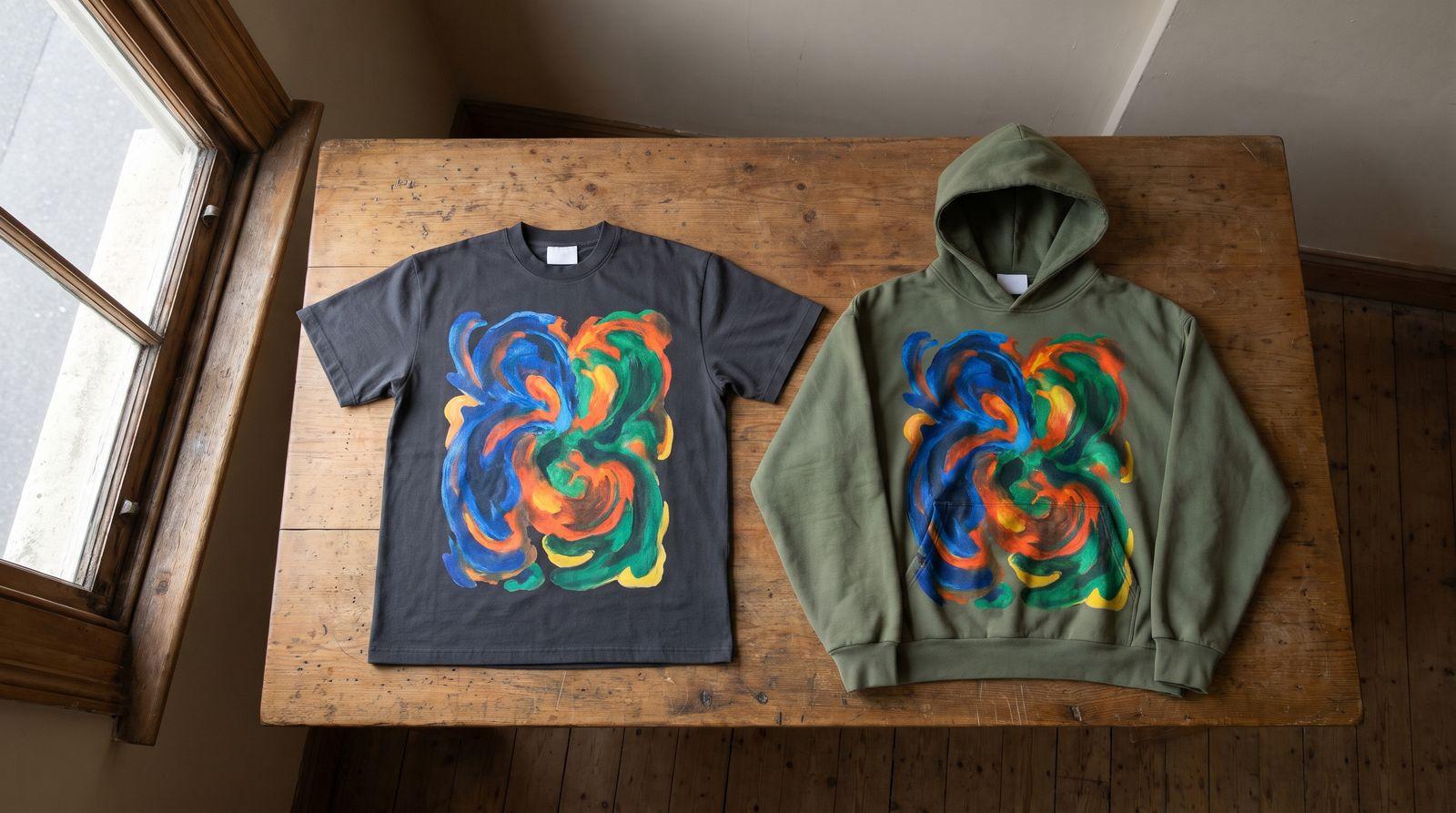
Tapstitch and Printify get compared because both let you sell clothing without holding stock, but they are different kinds of business. Tapstitch is a manufacturer with its own catalog of heavy blanks. Printify is a marketplace that routes your order to one of many independent print providers. This guide compares them on what a clothing seller notices first: the garment, the printing and labels, the delivery time, what happens when something goes wrong, and the cost of staying on the platform.
The Short Version
Pick Tapstitch when the garment is what you are selling: an oversized heavyweight hoodie, a boxy tee, your own neck label. Pick Printify when range and flexibility matter more: more product types, more sizes, several providers per product and a choice of where your orders are made. Neither is the better platform in general. They solve different problems, and plenty of stores use both.
What Each One Actually Is
Tapstitch's homepage describes premium clothing print on demand and dropshipping, with no minimum order quantity and bestsellers shipped from Los Angeles for US orders while the rest of the collection is made at its international facilities. You choose from its own blanks, upload artwork and Tapstitch makes and ships the order under your brand. The same page says it prints direct to garment on Brother and Kornit machines and also offers direct-to-film transfers.
Printify works differently. Printify's hoodies page says its network has multiple print providers for many products, so you can choose by price, location or delivery speed, and that those providers run more than 140 facilities across the US, Canada, Europe, Australia and Asia. The catalog is wider as a result, but the same hoodie can differ in quality and speed depending on which provider you pick.
That one difference explains most of what follows. With Tapstitch you get one standard of garment and one set of delivery times. With Printify you get choice, and the work of choosing.
The Garment: Weight, Fit and Price
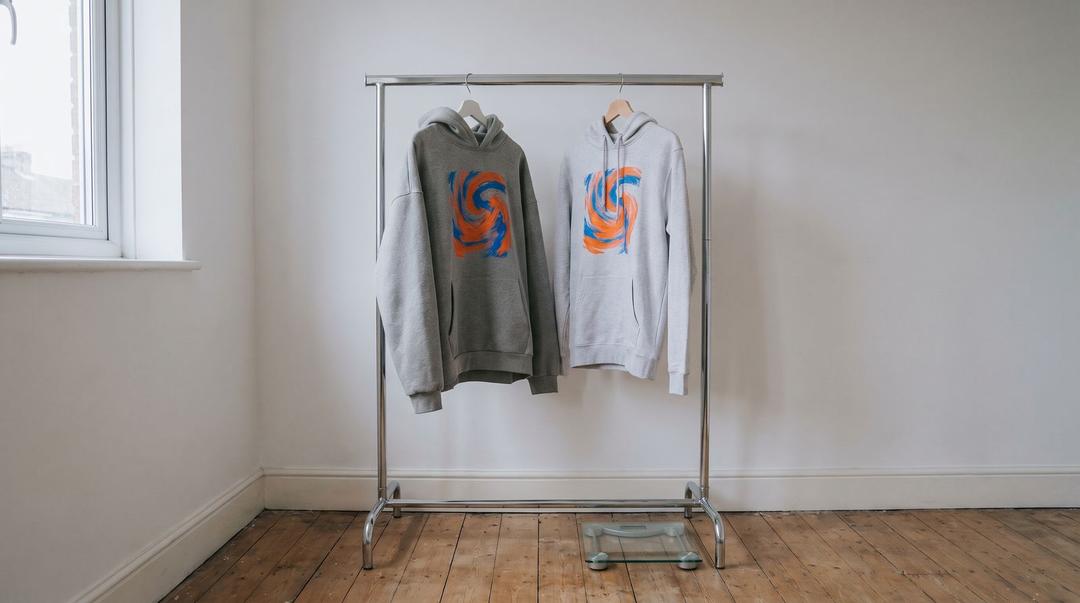
Tapstitch lists its blanks with their fabric weights, which is rare. On Tapstitch's homepage the oversize fleeced hoodie is 350 gsm and starts at $14.92, the essential heavyweight hoodie is 430 gsm and starts at $22.99, and the essential cotton tee is 260 gsm and starts at $5.99, with sizes running from S to 2XL on the hoodies and to 3XL on the tee. Those are starting prices for the blank with a print, before shipping, and they change with colour and print area.
Printify publishes fewer specifications up front, because the answer depends on the provider. Printify's custom hoodies page gives worked examples rather than a single price: a bestseller hoodie at a cost of $13.91 and a premium heavyweight hoodie at $25.56, and it names the Lane Seven Premium Pullover as the choice for a heavy, high-quality fabric. These are examples chosen by Printify to show margins, not a price list, so treat them as the range to expect.
Put side by side, the numbers say something simple. A basic Printify hoodie costs about what Tapstitch's oversized fleece does, and Printify's premium heavyweight option costs about what Tapstitch's 430 gsm hoodie does. What differs is the default: on Tapstitch the heavy, boxy cut is the standard range, while on Printify it is one option among many that you have to find and test.
If you want the heavy-fleece options at the big suppliers laid out, our hoodie supplier comparison covers them.
Printing, Labels and Branding
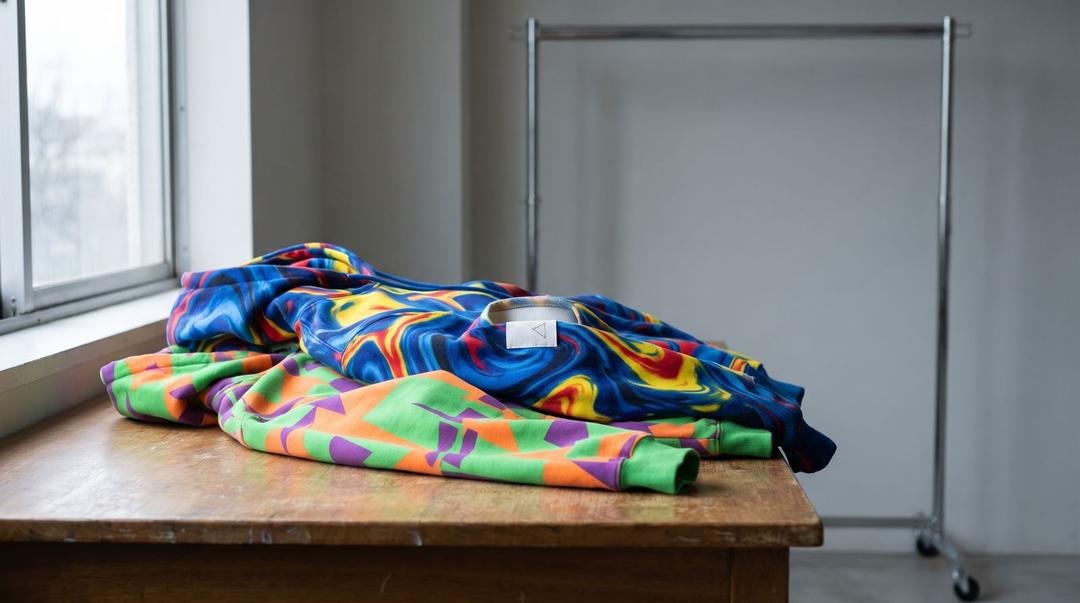
Both platforms print direct to garment and direct to film. Printify adds all-over printing and embroidery across its providers, which Printify's hoodies page lists as four techniques with the fabrics each suits. Tapstitch's catalog is built around those two methods.
Branding is where Tapstitch is more complete as a package. Its homepage says custom neck labels, hang tags and insert cards can be added to orders, and that branded packaging bags are still in development. A neck label is what makes a hoodie look like a brand rather than a print on a blank, so for a fashion seller this matters. There is one catch: Tapstitch's product labeling guide says custom labels are only available with international fulfilment, so a labelled garment cannot take the faster US route.
There is a legal side to labels that applies whichever supplier you use. In the United States, the Federal Trade Commission's textile labelling rule requires a label to show the fibre content, the name or registered number of the manufacturer or of a business marketing or handling the product, and the country where it was processed or manufactured. The same regulations on country of origin require every imported textile product to carry the name of the country where it was made. A garment made in a Chinese facility carries that on its label, and a custom neck label does not remove the requirement.
Shipping and Delivery Time
Delivery is where the two differ most. Tapstitch's shipping page gives average transit times by service: its US special line averages 5 days with 95% delivered within 7, a second special line averages 10 days with 95% within 15, and standard shipping averages 25 days with 95% within 30. Tapstitch's shipping page also says these are estimates that do not include production time, and that the first item from US fulfilment shipped within the US costs $4.44 with extra items from $0.50 to $2.20 each. Production time is shown on each product page instead: on the page for one of Tapstitch's bestselling tees, the shipping panel showed 1 to 3 days of production for international fulfilment.
Printify has no single answer, because shipping depends on the provider. Its network spans several continents, so a store with US customers can pick a US provider and a store with European customers a European one. That flexibility is the strongest argument for Printify outside the US. The cost is that you have to check each provider's production and shipping times, and compare them, before you promise a date. Our Tapstitch review covers where Tapstitch's bestsellers and international items are made. The Tapstitch pricing guide shows what a full order costs once shipping is added.
Returns, Reprints and Risk
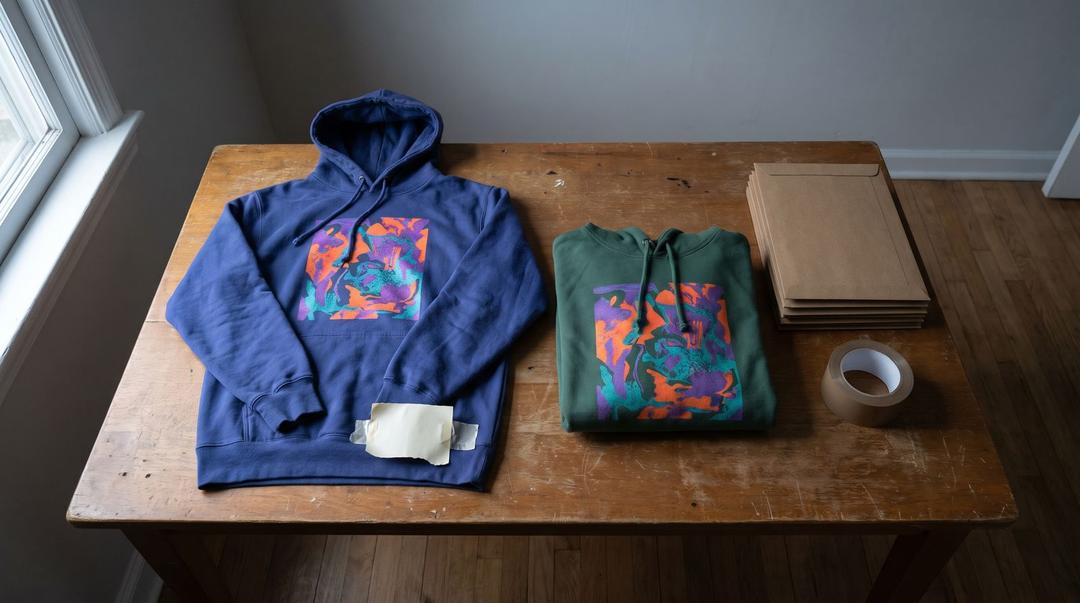
When an order goes wrong, the two handle it differently. Printify's hoodies page says that for a misprint or damage it will reprint or refund, with a photo of the issue. Tapstitch's returns policy lets buyers request a return or refund within 180 days of delivery, asks for claims about misprints, damage, defects or lost packages to be made within 7 days where possible, and says unwanted items that were produced exactly to the customer's files are not eligible. The homepage FAQ adds that Tapstitch handles returns for manufacturing defects and order errors but does not process returns from your own customers, which you handle under your store policy.
Neither platform will take back a hoodie because a customer changed their mind about the size. You need your own returns policy either way, and a size chart that matches the blank you chose.
Cost of Staying: Fees and Plans
Tapstitch has no monthly plan: you pay for the product, the print and shipping on each order, and for labels or tags if you add them. Printify has a free plan and a paid Premium plan that discounts most of the catalog. Whether Premium pays for itself depends on how much you spend on products each month, so work it out for your own volume. Our profit calculator lets you set both sets of costs against your retail price.
Both let you order a single item. Tapstitch has no separate sample programme, so a sample there is an ordinary one-piece order. Order one hoodie from each, wash it and wear it before you list anything.
Which One Suits Which Seller
Choose Tapstitch if:
- The garment is your product, and customers will notice weight and cut.
- You want custom neck labels and hang tags from the first order, and can accept international fulfilment for labelled pieces.
- Most of your customers are in the US and the unlabelled bestsellers fit your range.
Choose Printify if:
- You sell more than clothing, or need sizes beyond 2XL.
- Your customers are mostly outside the US and you want a provider close to them.
- You are still testing designs and want to compare providers on price and speed.
Consider a third option if you want a wide catalog from one supplier instead of a choice of providers. Printful's own hoodie page lists classic pullovers, zip-ups and heavyweight options alongside embroidery, and it is worth a look if you want that range from one supplier.
Conclusion
Tapstitch and Printify are not rivals so much as different tools. Tapstitch gives you a fixed, fashion-led garment with branding built in, and asks you to accept its shipping times. Printify gives you a larger catalog and a choice of providers, and asks you to do the checking. The deciding question is whether your customers are buying the fabric or the design. Order a sample from each, compare them on a hanger, and let the garment make the decision.
FAQ
Is Tapstitch cheaper than Printify?
It depends on the garment. For a standard tee the two overlap, because Printify lists the same kind of basic blank from several providers. For a heavyweight hoodie Tapstitch's own blanks are priced against Printify's premium heavy options, and the gap in either direction is small enough that shipping and your plan fee matter more than the blank itself.
Can I use Tapstitch and Printify in the same store?
Yes. Both connect to common store platforms, and nothing stops you using Tapstitch for hoodies and heavyweight tees and Printify for mugs, bags or anything else Tapstitch does not make. Keep the two products in separate collections so customers see consistent delivery times.
Which is better for a first clothing brand?
If the fabric is the pitch, Tapstitch, since heavy streetwear cuts are its standard range. If you are still testing what sells, or want mugs and accessories next to apparel, Printify's range and choice of providers make experiments cheaper. Order one sample from either before you list anything.
Keep reading
- Tapstitch Review: How It Compares With Printful and Printify
An honest Tapstitch review for streetwear sellers: heavyweight blanks and prices, printing and custom labels, shipping from China and Los Angeles, fees, and where Printful or Printify fits better.
- NinjaPOD Review: Is It Better Than Printify?
NinjaPOD reviewed: what Ninja Transfers' DTF-only print-on-demand app does, what it charges, where it ships, how its Shopify-only setup compares with Printify, and who should pick which.
- Printify vs Redbubble: Supplier vs Marketplace
Printify vs Redbubble compared: a supplier behind your own store against a marketplace that brings buyers. Fees, margins, traffic, design ownership, payouts and who should pick which.