Printful vs Redbubble: Supplier vs Marketplace
Printful vs Redbubble: compare margins, branding, and customer ownership to see which print-on-demand model actually fits the store you want to run.
· UPDATED · 9 MIN
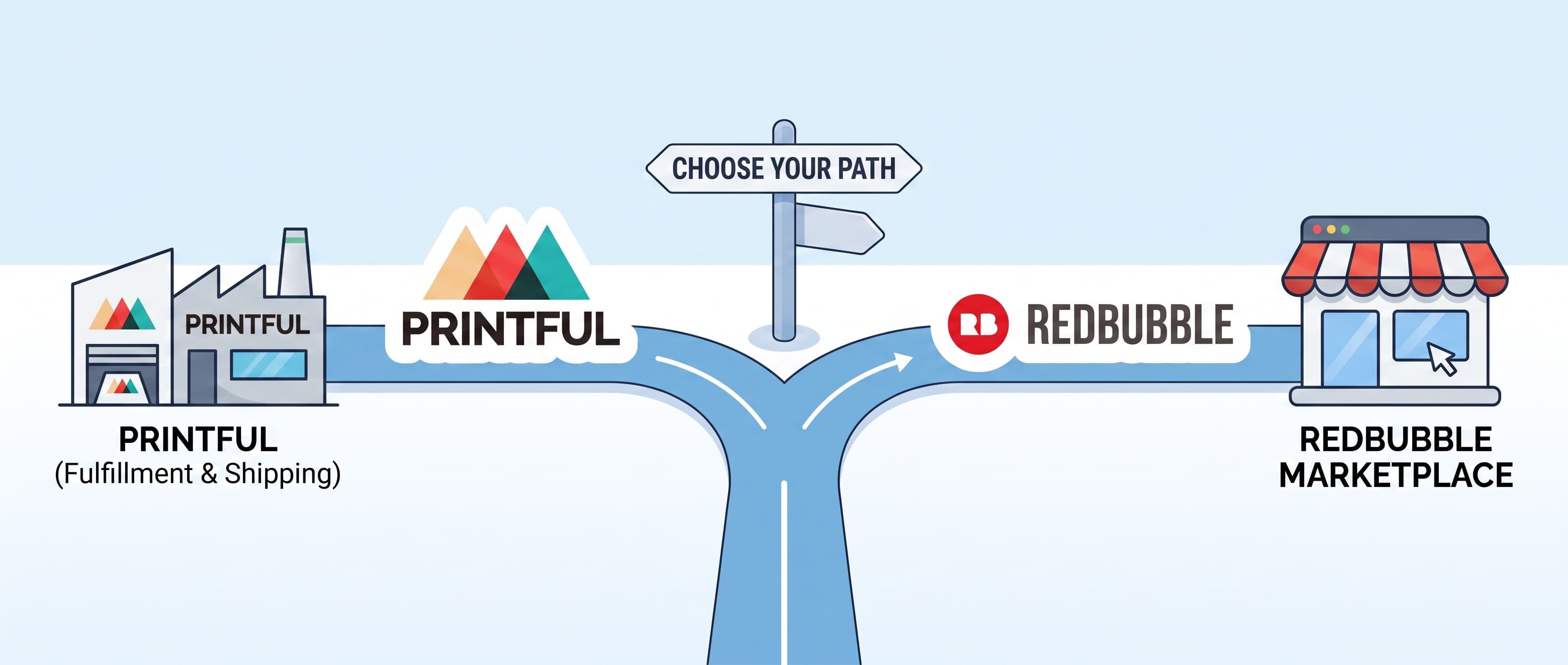
Choosing between Printful and Redbubble is not really a question of which platform is "better." It is a question of which business model fits the store you actually want to run. In our testing, the Redbubble vs Printful debate almost always comes down to a single fork in the road: do you want to build your own brand from the ground up, or place your art on an established platform and let it do the selling?
These two services solve different problems. One is a behind-the-scenes production partner. The other is a public storefront that already has buyers walking through the door. Both are legitimate print on demand routes, but the trade-offs in control, profit, and effort are significant. Below, we break down each model on the terms that matter most, so you can self-select the right tool for your goals rather than chasing a phantom "winner."
Key Differences at a Glance
| Factor | Printful | Redbubble |
|---|---|---|
| Model | White-label supplier for your own store | Public marketplace you sell on |
| Branding | Your brand front and center | Every package carries Redbubble branding |
| Pricing control | You set the retail price | You set a markup; Redbubble sets the base |
| Customer data | You own the customer relationship | Redbubble owns the customer |
| Traffic | You drive 100% of it | Built-in marketplace audience |
The Core Difference: A Supplier vs. a Marketplace
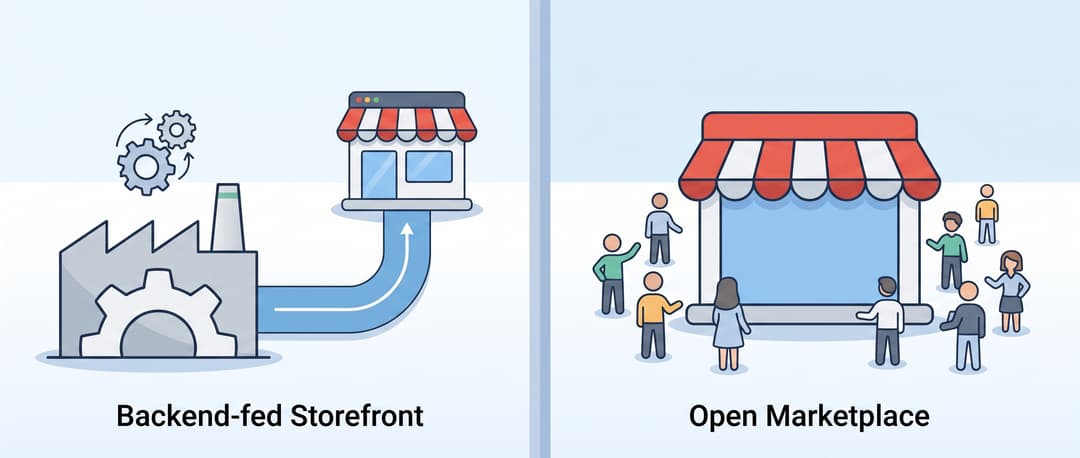
The verdict up front: Printful is a supplier that plugs into your business, while Redbubble is a marketplace where your business lives on someone else's platform. Everything else flows from that distinction.
Printful operates as a white label fulfillment service. It does not sell anything to the public directly. Instead, you integrate Printful with a wide range of e-commerce solutions, including Shopify, Squarespace, Wix, eBay, Etsy, and Amazon. Your storefront, your domain, your brand, and Printful simply prints and ships behind the scenes. The customer sees your business, not the supplier.
Redbubble works the opposite way. It is a self-contained destination. Redbubble is not simply a print-on-demand service that connects to a business's website, but a print-on-demand marketplace where customers go to purchase products, which is an online marketplace that averages around 40 million monthly site visitors. Artists upload designs, and Redbubble handles the traffic, transactions, and fulfillment. That convenience is real, but it comes with a catch: the customer belongs to Redbubble, not to you.
Does Printful Integrate With Redbubble?
This is one of the most common questions we see, and the answer is no. Printful does not integrate with Redbubble, and it never will, because the two occupy the same layer for different jobs. Printful is a backend supplier designed to feed products into a storefront you control. Redbubble is the storefront, a complete, closed marketplace with its own fulfillment. You cannot bolt a supplier onto another company's finished marketplace. Asking the two to connect is like asking a wholesale printer to plug into a rival retail chain; the models are structurally incompatible.
How Printful Works: The Integration Model
The Printful workflow is built around your store. You connect Printful to an e-commerce platform like Shopify, Etsy, or WooCommerce, then add your designs to products. Printful runs on a pay-per-order model, meaning you do not pay anything to design products, build your storefront, or connect Shopify, and Printful only charges when a customer order triggers fulfillment. When a customer buys from your site, Printful invisibly prints and ships the item under your branding. The buyer never knows a third party was involved.
How Redbubble Works: The Marketplace Model
Redbubble's workflow is far simpler, and deliberately so. You upload designs that get printed on demand onto t-shirts, stickers, mugs, and 70+ other products. You do not handle production, shipping, or returns, and Redbubble handles all of that, so your job is to design something people want, list it correctly, and let the platform's search engine surface your work. A shopper discovers your design on Redbubble, buys it there, and Redbubble pays you a royalty (which the platform calls your artist margin). No website, no marketing stack, no fulfillment headaches.
Printful vs redbubble: Profitability and Pricing
The verdict: Printful offers higher potential margins but hands you the responsibility of pricing strategy, while Redbubble's model is simpler but structurally caps your take-home per sale. Let's put real numbers behind that.
With Printful, you set the retail price and subtract your costs. A basic tee runs a specific base cost, and shipping is charged per order. Under this model, product base prices start at $11.50 for a basic t-shirt, and US shipping for t-shirts starts at $3.99. Everything above base cost plus shipping is yours to keep, which means your margin is a decision, not a fixed rate.
Redbubble flips the math. Redbubble sets a base price for each product, and you set a margin on top, which is typically 20% by default (checked October 2026). Buyers pay the base price plus your margin, and you earn that margin. In practice, this yields modest profit margins per unit, meaning sellers should accept a roughly $2.50 royalty per t-shirt and $0.30–$0.60 per sticker.
Profitability Scenario: Selling a $25 T-Shirt
| Step | Printful (your store) | Redbubble (marketplace) |
|---|---|---|
| Retail price | $25.00 (you choose) | Set by Redbubble base + your markup |
| Base cost | ~$11.50 | Included in Redbubble's base price |
| Shipping | ~$3.99 (US, first item) | Covered by Redbubble |
| Your profit / royalty | ~$9.51 per shirt | ~$2.50 per shirt (default 20% markup) |
The contrast is stark. On Printful, because you control the retail price and pay only base cost and shipping, a $25 shirt can net roughly $9.51 before any promotions or ad spend. On Redbubble, the platform's base price already bakes in the service fee for hosting the marketplace and the manufacturing fee charged by the third-party manufacturer, which means your artist margin sits on top, and pushing it higher raises the sticker price for buyers. Raising your margin increases your cut per sale but also raises the final product price, which can affect conversion rates.
The trade-off is clear. Printful rewards sellers willing to manage a pricing strategy with meaningfully higher margins. Redbubble trades that upside for radical simplicity, with no pricing decisions, no shipping math, and no returns to process. Which one wins depends entirely on how much control you want over the numbers.
Brand Control & Customer Ownership: Who's in Charge?
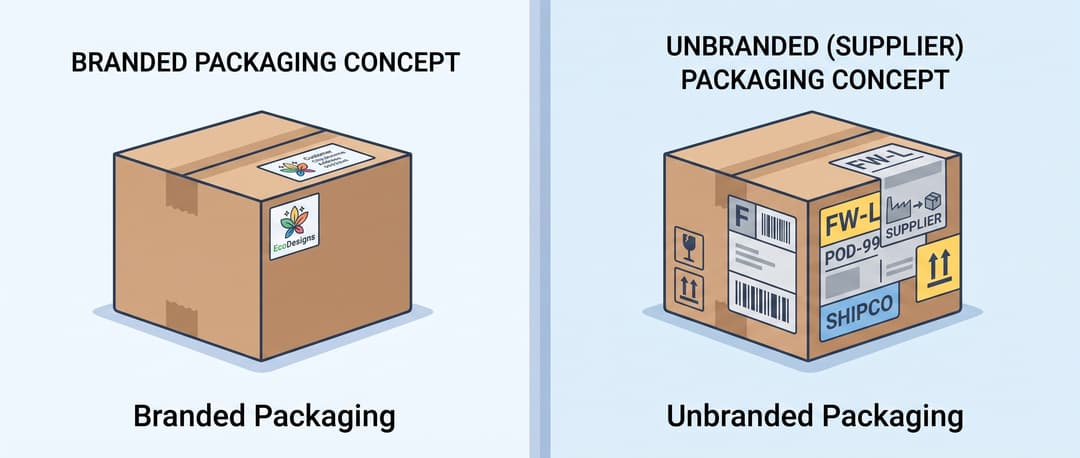
The verdict: Printful lets you build a real brand asset; Redbubble effectively rents you shelf space in its own. This is the most overlooked difference in the entire comparison, and often the most consequential for long-term brand building.
Start with the physical experience. Printful's white-label branding runs deep. The platform offers an excellent range of options for adding your own brand to all aspects of your customer's journey, including inside and outside clothing labels, packaging, packing slips, thank you cards, and order tracking pages. Custom neck labels, branded pack-ins, and personalized packing slips mean the unboxing experience reinforces your name. On Redbubble, every package that arrives carries Redbubble branding. The buyer's takeaway is that they bought from Redbubble, not from you.
Then there's the asset that quietly compounds over time: customer ownership. With Printful powering your own store, the customer's email, order history, and data are yours. You can build an email list, run remarketing, and turn a one-time buyer into a repeat customer. Redbubble keeps that relationship for itself. The candid consensus among artists is blunt: if you want to build a recognizable brand, Redbubble buyers buy from Redbubble, not from you.
Now the honest counterweight. Marketing effort is where Redbubble genuinely shines, and we won't downplay it. On Printful, driving traffic is 100% your responsibility, as no visitors arrive on their own. Redbubble hands you access to a large, active audience. According to Redbubble's annual reports, the marketplace has over 650,000 artists selling designs to approximately 5 million customers annually, representing a real audience of people actively looking for art-printed products. That organic traffic is the platform's core value. The catch is competition: with hundreds of thousands of artists uploading, your work competes for attention against a vast, crowded catalog, and most shops see little visibility without their own external promotion.
So the branding equation nets out like this. Printful gives you custom branding, customer data, and a durable asset, but at the cost of doing all your own marketing. Redbubble gives you built-in organic traffic, but at the cost of your brand identity and any direct relationship with the buyer.
The Verdict: Who Should Choose Printful vs. Redbubble?
Neither platform is universally superior. They are tools for different jobs. Here is how to self-select.
Who Should Choose Printful?
Printful is the stronger fit for entrepreneurs, existing brands, and creators who want to build a long-term asset rather than earn a quick royalty. If you prioritize brand control, higher profit margins, and a direct customer relationship, and you are prepared to manage your own store and marketing, Printful is built for you. It is also the natural destination for anyone researching how to switch from redbubble to printful after outgrowing the marketplace's limits: you would open your own Shopify, Etsy, or WooCommerce store, connect Printful as your supplier, re-upload your designs, and begin driving your own traffic while keeping the margin and the customer data.
For sellers who prioritize brand equity and customer ownership, setting up a store with Printful is the logical next step.
Best for:
Brand-builders, existing e-commerce sellers, and creators who want to own their customers and margins.
Who Should Choose Redbubble?
Redbubble is the better call for individual artists, designers, and hobbyists chasing passive income with minimal setup. When we weigh printful vs redbubble for artists specifically, Redbubble's appeal is convenience and a built-in audience rather than margin or brand control. You upload art, and the marketplace handles the rest. In practice, earnings on Redbubble vary widely based on niche selection and account tier. Under the Redbubble account tier system, artists are subject to varying fee structures that directly impact take-home pay. It rewards volume and patience, not brand-building.
Best for:
Artists and hobbyists who want a hands-off side income and access to existing marketplace traffic.
Putting It All Together
Step back from the feature lists and the Printful vs redbubble decision resolves into one trade-off. Printful gives you brand ownership, higher margins, and direct customer relationships, but demands that you build and market your own store. Redbubble gives you convenience and a ready-made audience, but takes your branding, your customer data, and a larger slice of every sale in return.
There is no single winner here, and anyone who declares one is missing the point. Whether Redbubble or Printful is right for you depends entirely on your goals. If you are testing designs for pocket money with zero overhead, the marketplace model earns its keep. If you are building a business you intend to grow, own, and eventually sell, the supplier model is the foundation worth investing in. Choose the model that matches the store you actually want to run, then commit to it.
FAQ
Does Printful integrate with Redbubble?
No, Printful does not integrate with Redbubble. Printful is a white-label backend fulfillment supplier that requires you to connect your own independent storefront. Redbubble is a closed, self-contained marketplace that handles its own printing and fulfillment. Because they perform different roles in the e-commerce chain, they are structurally incompatible.
How do I switch from Redbubble to Printful?
To switch from Redbubble to Printful, you must first establish your own independent storefront using an e-commerce platform like Shopify, Etsy, or WooCommerce. After setting up a store with Printful and connecting it as your fulfillment partner, you can recreate your product listings on your new site. You will need to export your original design files from your local storage and upload them to your new platform, as there is no direct migration tool between Redbubble and Printful.
How do Printful and Redbubble compare to Printify, Zazzle, or Society6?
Printify is a direct competitor to Printful, operating as a white-label supplier network rather than a marketplace. Zazzle and Society6 are structured similarly to Redbubble as public marketplaces. If you want full control over your branding, you should choose a supplier model like Printful or Printify. If you prefer a hands-off approach with a built-in audience, marketplaces like Redbubble, Zazzle, or Society6 are more appropriate.
Keep reading
- Redbubble Alternatives Compared: choosing Marketplace or POD supplier
Explore Redbubble alternatives split into two models: marketplaces like Society6 and Zazzle, or POD suppliers like Printify and Printful. Find your fit.
- Printful vs Gelato: Which Should You Choose in 2026?
Printful vs Gelato: A detailed 2026 comparison. We review fulfillment models, print quality, pricing, and product catalogs to help you choose the right POD partner.
- POD Shipping Times: Printful vs Printify vs Gelato in 2026
Comparing print on demand shipping times for 2026? We analyze fulfillment and transit for Printful, Printify, and Gelato to help you choose the right POD platform for your store.