Best POD for Custom Jewelry in 2026: 4 Platforms Compared
Find the best platform for your custom jewelry business in 2026. We compare 4 top POD services on product range, engraving quality, base costs, and more.
· 8 MIN
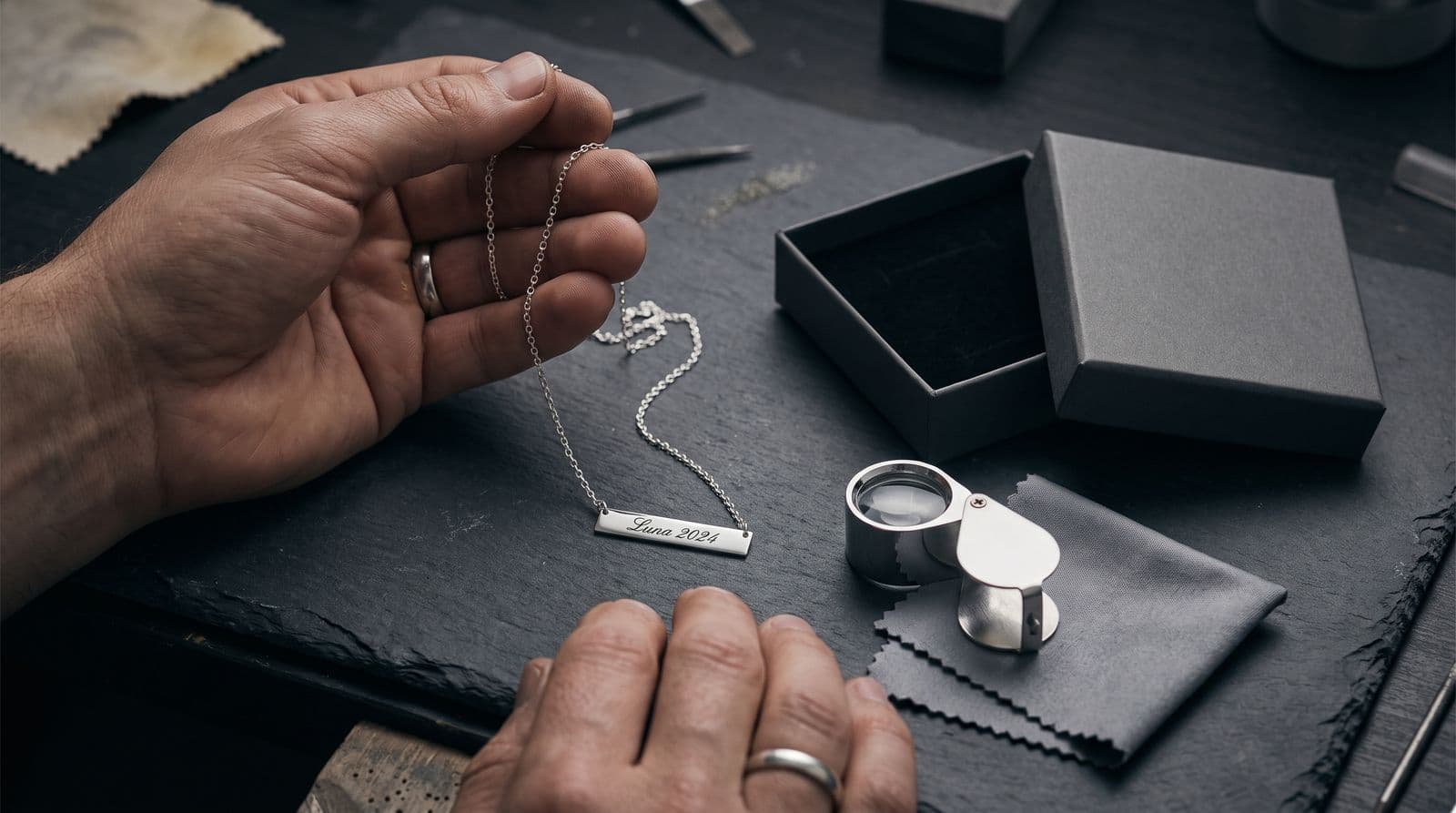
The market for personalized jewelry is expanding, driven by customers seeking unique pieces that tell a story. For entrepreneurs and designers, entering this market traditionally meant significant upfront investment in inventory, materials, and specialized equipment. Print-on-demand (POD) changes this equation, offering a low-risk, high-potential path to launching a custom jewelry brand.
By partnering with a POD service, you can offer a range of custom products without ever holding stock yourself. When a customer places an order, your provider creates, packages, and ships the item directly to them. This article compares four platforms offering print-on-demand jewelry, evaluating them against a consistent set of criteria to help you find the best fit for your business.
Our Review Criteria for POD Jewelry Platforms
To provide a fair and useful comparison, we evaluated each platform on four key criteria that are critical to success in the custom jewelry market. Understanding these trade-offs is the first step in selecting the right partner.
1. Product Catalog & Material Quality
Unlike apparel, jewelry’s perceived value is tied directly to its material. We assess the range of base products, from necklaces and bracelets to earrings and keychains. We also examine the quality of the materials offered, such as surgical-grade stainless steel, 18K gold plating, and sterling silver. The distinction between a simple printed charm and a high-quality, durable piece with professional engraved jewelry pod options is a major factor.
2. Personalization Options
Customization is the core of this niche. We look at the technology each platform provides for personalization. This includes the quality and precision of laser engraving for text and simple graphics, as well as any options for full-color printing or photo inserts. The ease of use of the design tools and the ability to offer customers meaningful personalization directly impacts a product’s appeal and value.
3. Base Costs & Profit Margins
The financial viability of your store depends on your profit margin. We consider the base cost of each jewelry item, which is the wholesale price you pay the provider. This figure, combined with shipping fees and any monthly subscription costs, determines your final margin. A lower base cost isn’t always better; it must be weighed against material quality and the reliability of the supplier.
4. Fulfillment & Shipping
Jewelry is a delicate, high-value product that requires careful handling. We evaluate the fulfillment process, including average production times and the quality of packaging used to protect items in transit. Reliable, timely shipping is essential for customer satisfaction. We also note any availability of custom branding options, such as branded boxes or personalized message cards, which can elevate the customer experience.
The Best Print-on-Demand Platforms for Jewelry Compared
We applied our criteria to four platforms in the print on demand jewelry space: ShineOn, Gearbubble, InterestPrint, and Teelaunch. Each offers a distinct set of features and represents a different approach to the market.
ShineOn
ShineOn is not a general POD provider; it is a specialist platform built exclusively for selling jewelry and watches. This focus allows it to offer features tailored to the jewelry market, most notably its emphasis on message-card products. These combine a piece of jewelry with a personalized, gift-oriented message card, a format that performs well on social media and platforms like Etsy, particularly for holidays and special occasions.
ShineOn handles production and fulfillment from its own facilities in the US and EU, ensuring consistent quality. The platform also provides sellers with training materials and product photos to help with marketing. ShineOn’s platform features demonstrate its focus on high-conversion jewelry products for social media sellers. The primary trade-off is its niche focus; if you plan to sell other product categories like apparel or wall art, you would need a different supplier.
Pros:
- Specializes exclusively in high-conversion jewelry products.
- Integrated message-card system is ideal for the gifting market.
- Provides marketing assets and training for sellers.
Cons:
- Limited product range outside of its core necklace and bracelet offerings.
- Not suitable for stores with a diverse product catalog.
Gearbubble
Gearbubble is the platform to look at if material quality is your first filter. Unlike most POD services, which top out at plated or stainless steel pieces, Gearbubble manufactures sterling silver and solid gold jewelry in-house and is backed by Bergio International, an established fine jewelry house. Its catalog centers on necklaces, bracelets, earrings, and pendants, with engraving available and a message-card format comparable to ShineOn’s. Beyond jewelry it offers mugs, drinkware, and basic apparel, so a store can add a few supporting products without a second supplier.
The trade-offs are cost and plan structure. Base prices sit above network-model competitors, as you would expect for precious metals, and while the free plan is enough to start, the Platinum tier that unlocks exclusive jewelry runs $197 per month, among the most expensive subscriptions in POD. Integrations cover Shopify, Etsy, and Amazon. You can review the range on Gearbubble’s site.
Pros:
- Sterling silver and solid gold made in-house; the strongest materials in this comparison.
- Engraving and message cards for the gifting market.
- Shopify, Etsy, and Amazon integrations.
Cons:
- Higher base costs than plated or stainless alternatives.
- The $197/month Platinum plan is a steep step up from free.
- Catalog outside jewelry is basic.
InterestPrint
InterestPrint is a general print-on-demand platform with a catalog of over 1,000 products, and its jewelry section is the broadest of the four: photo lockets, dog tag necklaces, bracelets, and dozens of engraved options sit alongside apparel, bags, shoes, and home décor. For sellers whose designs lean on novelty, printed artwork, or photo personalization rather than precious metals, that breadth is the main draw, and base costs are competitive.
The trade-offs follow from the model. Production is in China, so delivery times to US and EU customers are longer than domestic fulfillment, and the pieces are fashion jewelry rather than fine jewelry. Integration is Shopify (plus WooCommerce), with no Etsy connection, which matters for a niche where Etsy is a primary channel. Some sellers have reported SKU-sync problems with the Shopify app, so test the integration before scaling. See InterestPrint’s catalog for the current jewelry range.
Pros:
- Largest jewelry catalog in this comparison, including photo lockets and dog tags.
- Competitive base costs and frequent new products.
- One supplier for jewelry and a wide range of other categories.
Cons:
- Fashion jewelry only; no sterling silver or gold.
- Longer shipping from China-based production.
- No Etsy integration.
Teelaunch
Teelaunch is a long-running Shopify-native POD app with a small but practical jewelry line: UV-printed charm necklaces and bracelets on sterling-silver-plated brass, plus laser-engraved pieces, shipped with a velvet pouch. It is the simplest way to add a few jewelry products to an existing Shopify store and test whether the category sells before committing to a specialist.
Its limits are clear. The jewelry catalog is narrow, production times run longer than the larger platforms, integrations are Shopify and Etsy only, with no API, and customer support draws mixed reviews. Pricing is per product with no monthly fee, which keeps the test cheap. Current products and prices are on Teelaunch’s site.
Pros:
- Shopify-native and free to use; fast to set up.
- Laser engraving and full-color UV-printed charms.
- Low-commitment way to test jewelry alongside other products.
Cons:
- Small jewelry catalog; plated materials only.
- Shopify and Etsy only, no API.
- Slower production and inconsistent support.
| Feature comparison | ShineOn | Gearbubble | InterestPrint | Teelaunch |
|---|---|---|---|---|
| Model | Jewelry specialist, own US/EU production | In-house fine jewelry manufacturer | General POD, China-based production | General POD, Shopify app |
| Engraving | Yes | Yes | Yes | Yes (laser) |
| Sterling silver or solid gold | Not listed on public catalog | Yes, both | No | No (plated brass) |
| Message cards | Yes | Yes | No | No |
| Etsy integration | Yes | Yes | No | Yes |
| Shopify integration | Yes | Yes | Yes | Yes |
| Monthly fee | None required | Free; paid tiers to $197/mo | None | None |
Verdict: Choosing the Right Jewelry Supplier for Your Business
There is no single best POD platform for every jewelry seller. The right choice depends on your business priorities, brand identity, and target market. Each platform represents a set of trade-offs, and your decision should be guided by which of those trade-offs you are most comfortable making.
Our verdict is that your selection should be based on your primary goal.
- Best for the Gifting Market: ShineOn. For sellers focused on the high-conversion gift niche (birthdays, holidays, anniversaries), ShineOn’s specialization in message-card products and its US and EU production provide a clear advantage. It is the most direct path to a proven product format.
- Best for Premium Materials: Gearbubble. For sellers building a brand on real sterling silver and gold rather than plated pieces, Gearbubble is the only platform here that manufactures precious-metal jewelry in-house. The higher base costs and the expensive top plan are the price of that positioning.
- Best for Catalog Variety: InterestPrint. If your strategy relies on novelty, printed artwork, or photo personalization across many jewelry styles, InterestPrint’s catalog is the broadest. Budget for longer shipping and plan around the lack of an Etsy integration.
- Best for Testing Jewelry in an Existing Shopify Store: Teelaunch. For sellers who already run a Shopify store and want to try a few engraved or printed pieces with no commitment, Teelaunch is the lowest-friction option. Move to a specialist once the category proves itself.
Ultimately, your choice of pod jewelry suppliers should align with your e-commerce strategy. If your strategy revolves around a highly curated storefront, understanding the best print-on-demand platforms for Etsy can help you match the right supplier to the right marketplace.
The Best POD for Custom Jewelry: Final Thoughts
Launching a custom jewelry brand through print-on-demand is more accessible in 2026 than ever before. The platforms reviewed here, ShineOn, Gearbubble, InterestPrint, and Teelaunch, all provide workable tools to bring your creative ideas to life without the risks of managing inventory.
The core decision rests on a trade-off between material and breadth. Gearbubble and ShineOn make a narrow range of jewelry well, in their own facilities, with gifting formats built in; InterestPrint and Teelaunch make jewelry one category among many, with wider choice or simpler setup but plated materials and longer or less predictable fulfillment.
Before making a final commitment, the most important step is your own. Ordering samples is the only way to truly assess the look, feel, and packaging of a product. Choose your top two platforms based on this review, order a sample of the same design from each, and let the final product quality make the ultimate verdict for your brand.
FAQ
Can I sell print-on-demand jewelry on Etsy or Shopify?
Yes, all the platforms discussed offer robust integrations with major e-commerce platforms like Etsy and Shopify.
What is the quality of print-on-demand jewelry like?
Quality varies by provider but is generally high for reputable suppliers, often using stainless steel or sterling silver with laser engraving.
How is POD jewelry packaged for shipping?
Most suppliers use padded mailers or small boxes, and many offer custom branding options like packaging inserts or gift boxes for an additional fee.
Keep reading
- Best Print-on-Demand for Etsy in 2026: 5 Platforms Compared
Choosing the best print-on-demand for Etsy? We compare Printify, Printful, and more on integration, product quality, and cost to help you find the right partner for 2026.
- Best Print-on-Demand for Stickers: 5 Platforms Compared
Searching for the best print on demand for stickers? We compare Printful, Printify, Gelato, and more on product range, print quality, base cost, and integrations.
- Best Print-on-Demand for Shirts in 2026: 6 Suppliers Compared
Find the best print on demand shirts supplier for your brand in 2026. We compare Printful, Printify, Gelato, and more on print quality, pricing, and catalog depth.