Best Print-on-Demand for Stickers: 5 Platforms Compared
Searching for the best print on demand for stickers? We compare Printful, Printify, Gelato, and more on product range, print quality, base cost, and integrations.
· 8 MIN
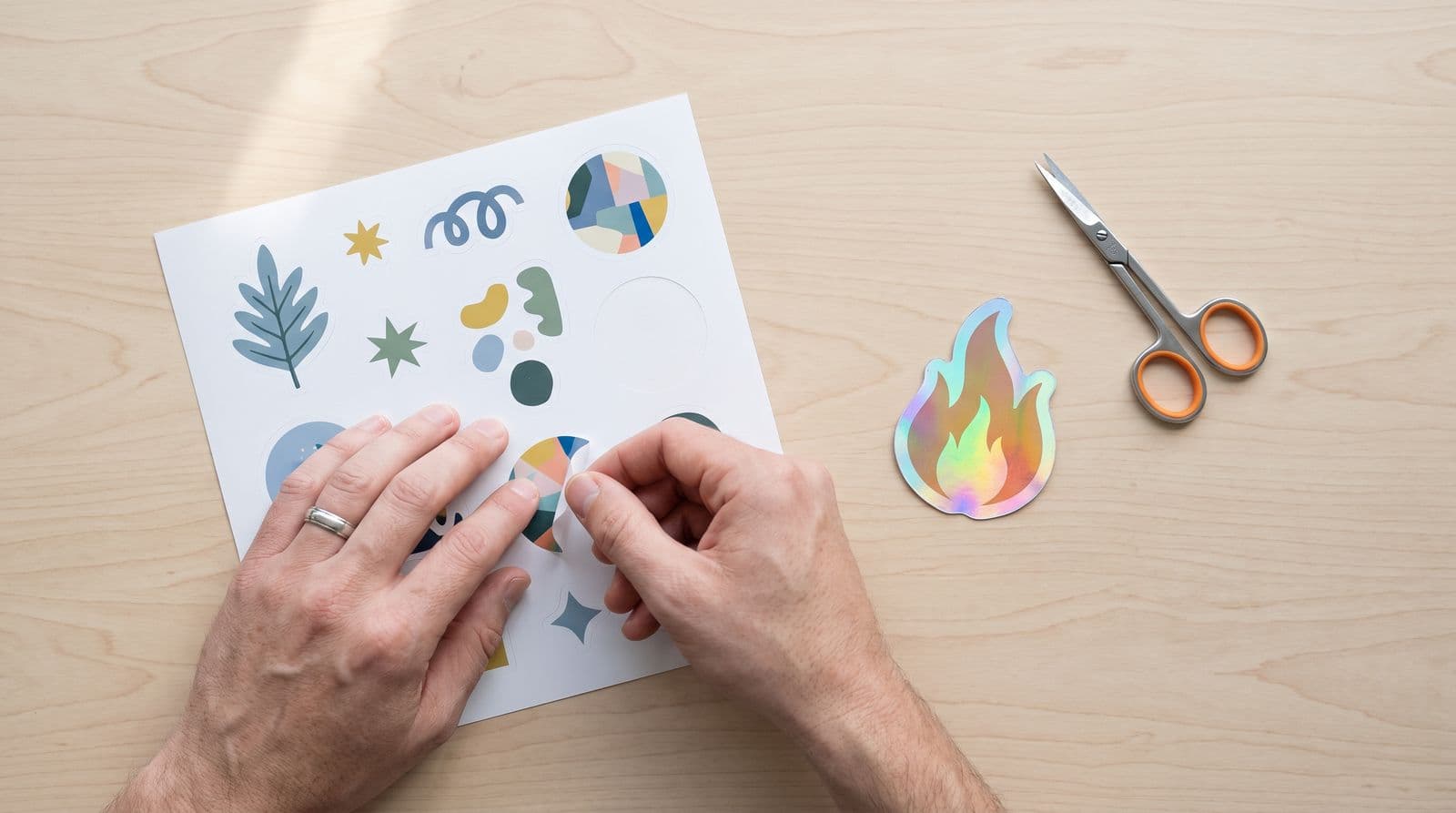
Stickers are a versatile and high-margin product, making them a popular starting point for creators, artists, and e-commerce brands. But choosing the right fulfillment partner is a critical decision. Each print on demand stickers service offers a different combination of product variety, print quality, cost, and integrations, creating a complex landscape of trade-offs.
This article provides a direct comparison of the leading platforms for selling stickers online. We will assess each service against a consistent set of criteria to help you make an informed choice. Our analysis covers sticker variety and materials, base cost and potential profit margin, print quality, and the ease of integration with popular e-commerce storefronts. By the end, you will have a clear understanding of which platform is the best fit for your specific business goals.
Print-on-Demand Stickers: Comparison at a Glance
To provide a clear overview, we’ve compiled the core specifications for each platform into a single table. These are the data points that matter most when choosing a supplier: the types of stickers available, the business model, pricing, and technical compatibility. The review criteria used here, product range, base cost, and integrations, form the basis for our detailed analysis in the sections that follow.
Base costs are taken from each platform’s own catalog in October 2026 and will change; treat them as a snapshot rather than a quote. Printful’s figure is for a 3"×3" sticker; Printify’s and Fourthwall’s are each platform’s lowest listed price, which applies to the smallest size. Marketplaces set their own prices, so no base cost is listed for them.
| Platform | Model | Sticker types offered | Materials and finishes | Base cost (kiss-cut single, Oct 2026) | Min. order | Key integrations |
|---|---|---|---|---|---|---|
| Printful | In-house fulfillment | Kiss-cut singles (3"×3" to 15"×3.75" bumper size), holographic kiss-cut, kiss-cut sticker sheets | Glossy vinyl; holographic vinyl; glossy film sheets (indoor) | $2.34 (3"×3") | 1 | Shopify, Etsy, WooCommerce, TikTok Shop, Wix, Squarespace, Amazon |
| Printify | Fulfillment network | Kiss-cut, die-cut, holographic die-cut, transparent outdoor die-cut, bumper, sticker sheets, labels | Vinyl (satin and glossy), holographic, transparent; sheets in white, holographic, or transparent | From $1.42, smallest size ($1.02 with Premium) | 1 | Shopify, Etsy, WooCommerce, TikTok Shop, Walmart, eBay, Wix, Squarespace |
| Fourthwall | All-in-one creator storefront | Kiss-cut, die-cut, kiss-cut sticker sheets, holographic sticker sheets | Waterproof vinyl; holographic | From $2.29 | 1 | YouTube, TikTok Shop, Twitch, Instagram, Discord (own storefront; no Etsy or Shopify) |
| Redbubble | Marketplace | Individually cut stickers | Vinyl in glossy, matte, or transparent | Set by platform; artist margin varies | 1 | None (sells on Redbubble.com) |
| Zazzle | Marketplace | Custom-shape, round, square, sheets, bumper | Vinyl and paper | Set by platform; artist margin varies | 1 | None (sells on Zazzle.com) |
The Platforms in Detail
While the table provides the raw data, the true character of each platform lies in the trade-offs it presents. This section explores the qualitative strengths and weaknesses of each service, explaining what the numbers mean for you as a seller.
Printful
Printful operates on an in-house fulfillment model, meaning it owns and controls its production facilities. This is its core strength, leading to a high degree of consistency in print quality, color accuracy, and fulfillment times, because every sticker comes off the same equipment regardless of where the order originates. The trade-off is a higher base cost than network models: a 3"×3" kiss-cut is $2.34, against a starting price of $1.42 on Printify. The sticker range is also deliberately narrow. Printful’s catalog covers kiss-cut singles in four sizes (the largest, 15"×3.75", is a bumper-sticker format), a holographic kiss-cut, and a single 5.83"×8.27" kiss-cut sticker sheet at $5.15, all on glossy vinyl; there is no die-cut or matte option, and the sheets are rated for indoor use. For sellers who want one reliable supplier and a tight, consistent product line, that focus is a feature. For sellers who want to experiment with formats, it is a limit. Getting started is free, and Printful’s sticker page lists the current options.
Printify
Printify’s advantage is choice. As a fulfillment network, it connects sellers to a vast array of independent print providers around the world. This competition drives down base costs and results in an extensive catalog that includes products like print on demand sticker sheets in white, holographic, and transparent finishes, plus transparent outdoor die-cuts and bumper stickers. The primary trade-off is variability. Print quality, materials, and shipping speeds can differ significantly from one supplier to another within the network. This makes ordering samples essential. The numbers show why the research is worth it: kiss-cut singles start at $1.42, die-cut at $3.75, holographic die-cut at $5.31, and sticker sheets at $5.14, with Printify Premium taking up to 20% off each. For sellers willing to do that initial research, Printify offers excellent value and product variety. You can explore the full range in Printify’s sticker selection.
Fourthwall
Fourthwall is best understood as an all-in-one creator commerce platform rather than a pure fulfillment service. It gives you a free, branded storefront with fulfillment built in, and its integrations are aimed squarely at creators: YouTube product shelf, TikTok Shop, Twitch, Instagram, and Discord. For stickers specifically, it covers all four formats a seller is likely to want, kiss-cut and die-cut singles plus standard and holographic sticker sheets, from $2.29 with no monthly fee. The trade-off is that it is a closed system. There is no Etsy or Shopify integration, so it suits creators who want to sell to an audience they already have, not sellers building a marketplace presence. Fourthwall’s sticker options are listed on its site.
Redbubble
Redbubble is a marketplace, not a fulfillment partner. Its value proposition is access to a massive, built-in audience of buyers actively searching for unique designs. For artists, this means the potential to make sales without any marketing or store management. The significant trade-off is a lower profit margin, as Redbubble sets the base price and takes a large portion of the sale. Competition is also intense, with millions of designs on the platform. It’s a strong option for passive income but a poor choice for brand-building. You can view thousands of examples in Redbubble’s sticker category.
Zazzle
Like Redbubble, Zazzle is a marketplace that gives designers access to a large existing customer base. Its key differentiator is a powerful suite of on-site customization tools, which allow customers to personalize products with their own text and images. This can be a major selling point for certain niches, like event-specific stickers or personalized gifts. The trade-offs are the same as with any marketplace: lower profit margins, fierce competition, and no direct relationship with the customer. Check out the personalization options on Zazzle’s custom stickers.
Key Considerations for Sticker Sellers
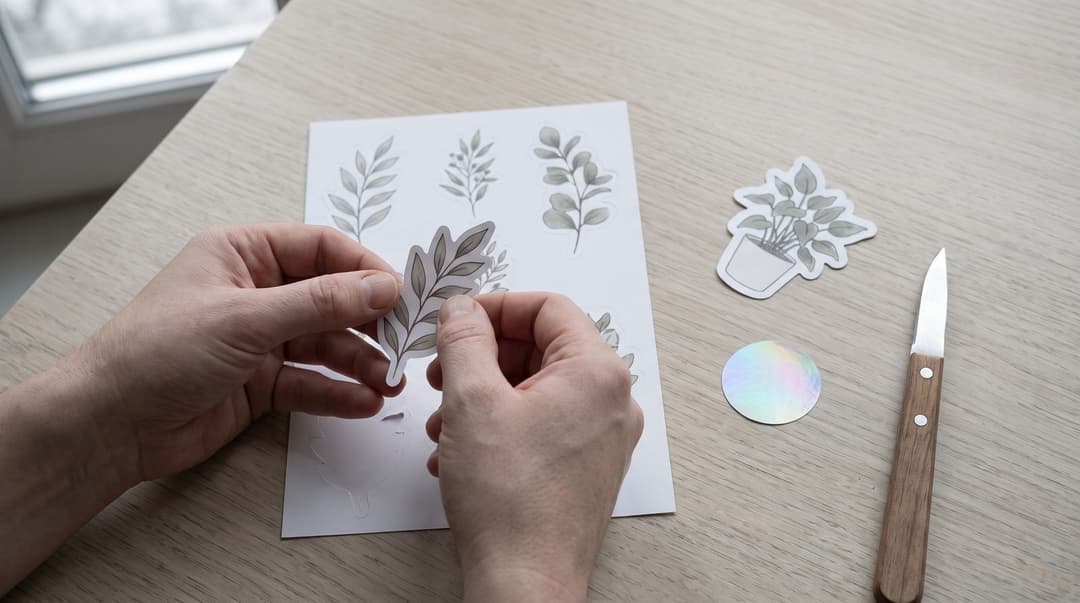
Beyond the platform choice, successful sticker sellers focus on specific product types and sales channels. Here, we address some of the most common strategic questions.
A Closer Look at Print on Demand Sticker Sheets
Sticker sheets, which bundle multiple small designs onto a single backing, offer excellent value to both the seller and the customer. They allow you to sell a collection of themed designs at once, increasing the perceived value and your average order value. Support varies more in depth than in availability. Printify is the strongest option, with sheet products from $5.14 in white, holographic, and transparent finishes across several providers. Fourthwall offers both standard and holographic sheets. Printful offers a single kiss-cut sheet (5.83"×8.27", $5.15), glossy and rated for indoor use. Zazzle lists sheets among its marketplace formats; Redbubble does not offer them. If sheets are central to your strategy, Printify gives you the most room to experiment.
Connecting to a Storefront: Print on Demand Stickers for Etsy
Etsy is one of the most popular channels for selling stickers, and a seamless integration is critical for managing orders efficiently. The fulfillment services, Printful and Printify, both offer robust, direct integrations with Etsy. This allows for automatic order syncing, product pushing, and fulfillment updates, which is essential for scaling a business. Fourthwall, Redbubble, and Zazzle do not integrate with Etsy, as each is a self-contained sales platform. For a more detailed breakdown of how these services work with the platform, see our complete guide to the best print-on-demand platforms for Etsy.
What About Bulk Ordering vs. POD?
As your business grows, you might consider ordering stickers in bulk from a service like Sticker Mule. This is a different model from print-on-demand and involves a significant trade-off. Ordering in bulk dramatically lowers the cost per sticker, leading to much higher profit margins. However, it requires a significant upfront investment and the risk of holding unsold inventory. Print-on-demand is ideal for testing new designs with zero financial risk. Once a design proves to be a consistent bestseller, moving to bulk ordering can be a logical next step to maximize profitability.
Verdict: Which Is the Best Print on Demand for Stickers?
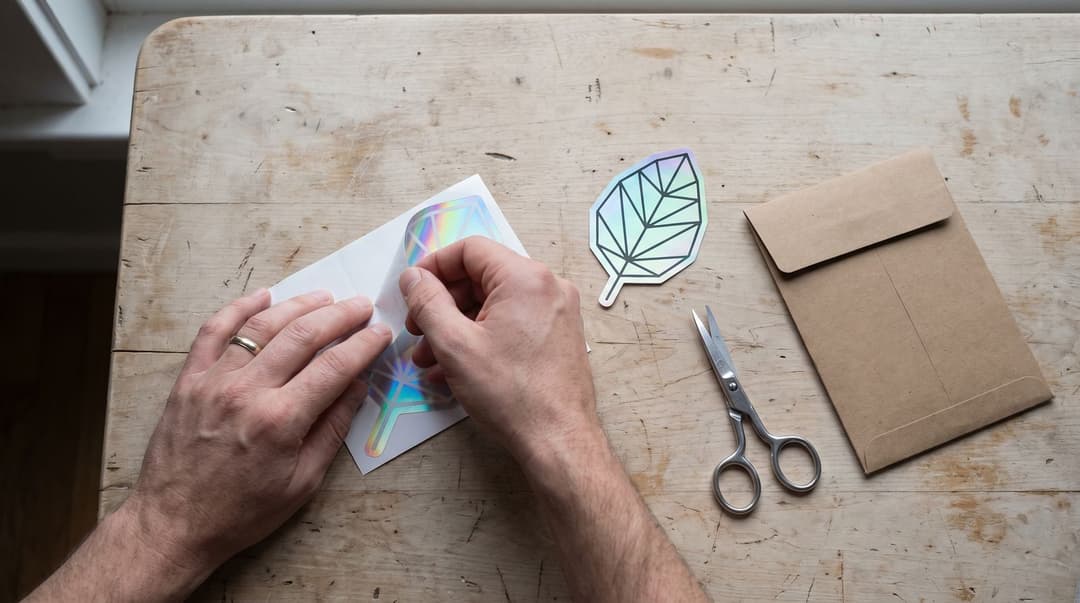
There is no single best platform for every sticker seller. The right choice depends on your priorities regarding quality, variety, and business model. Our verdict is a set of recommendations tailored to different seller needs.
- Best for Overall Quality and Consistency: Printful. Its in-house manufacturing provides reliable quality control, making it a strong choice for brand-focused sellers who prioritize a consistent customer experience and are happy with kiss-cut formats.
- Best for Variety and Price Competition: Printify. Its vast network of print providers offers an unmatched range of sticker types, including sheets, at highly competitive base costs. It’s the best option for sellers who want maximum choice and are willing to vet suppliers.
- Best for Creators with an Existing Audience: Fourthwall. A free storefront with YouTube, TikTok Shop, and Twitch integrations and all four sticker formats, for creators who would rather sell to their own community than list on a marketplace.
- Best for Beginners with No Store: Redbubble or Zazzle. These marketplaces offer immediate access to an audience with no upfront cost or technical setup, making them ideal for testing the waters or earning passive income from a design portfolio.
Conclusion
Choosing the right partner for your print on demand stickers is a foundational decision for your business. The choice hinges on a central trade-off: the control, branding, and higher profit margins of a dedicated fulfillment service like Printful or Printify, versus the built-in audience and simplicity of a marketplace like Redbubble, with a creator storefront like Fourthwall sitting between the two. Each model is a valid path, and the best print on demand platform is the one that aligns with your resources, brand ambitions, and sales strategy. By weighing the criteria of product range, print quality, and integrations, you can confidently select the service that will help your creative business succeed.
FAQ
What's the difference between die-cut and kiss-cut stickers?
Die-cut stickers are cut precisely to the shape of your design, through both the sticker material and the paper backing. Kiss-cut stickers are only cut through the vinyl layer, leaving the square backing sheet intact, which can make them easier to peel.
Can I order samples before selling?
Yes, all major fulfillment platforms like Printful, Printify, and Gelato encourage sample ordering. They typically offer a discount on sample orders so you can test print quality, materials, and colors before listing products in your store.
What is the typical profit margin on POD stickers?
Profit margins vary based on the platform's base cost and your retail price. Because stickers have a low base cost, it's common for sellers to achieve profit margins of 40% to 60% or even higher, depending on their brand and design value.
Keep reading
- Best Print-on-Demand for Etsy in 2026: 5 Platforms Compared
Choosing the best print-on-demand for Etsy? We compare Printify, Printful, and more on integration, product quality, and cost to help you find the right partner for 2026.
- Best Print-on-Demand for Shirts in 2026: 6 Suppliers Compared
Find the best print on demand shirts supplier for your brand in 2026. We compare Printful, Printify, Gelato, and more on print quality, pricing, and catalog depth.
- Print on Demand Books: How It Works & Best Services Compared
Considering print on demand books? This guide explains how it works, compares POD vs. offset printing, and reviews the best services like KDP, Lulu, and IngramSpark.