Best Print-on-Demand for Etsy in 2026: 5 Platforms Compared
Choosing the best print-on-demand for Etsy? We compare Printify, Printful, and more on integration, product quality, and cost to help you find the right partner for 2026.
· 9 MIN

Selling on Etsy offers a direct connection to millions of buyers seeking unique, creative goods. But for many creators, the logistics of producing, storing, and shipping products can be a significant barrier. Print-on-demand (POD) offers a powerful solution, allowing you to sell physical goods with your designs while a partner handles all the fulfillment. But choosing that partner is a critical business decision.
This article provides a detailed comparison of the best print-on-demand platforms for Etsy to help you find the right fit for your brand. While many sellers begin by looking at a direct comparison of the two biggest names, our Printful vs. Printify analysis shows the full picture is more complex. The best platform is not universal; it depends entirely on your priorities, from product range to profit margins.
How We Evaluated POD Platforms for Etsy
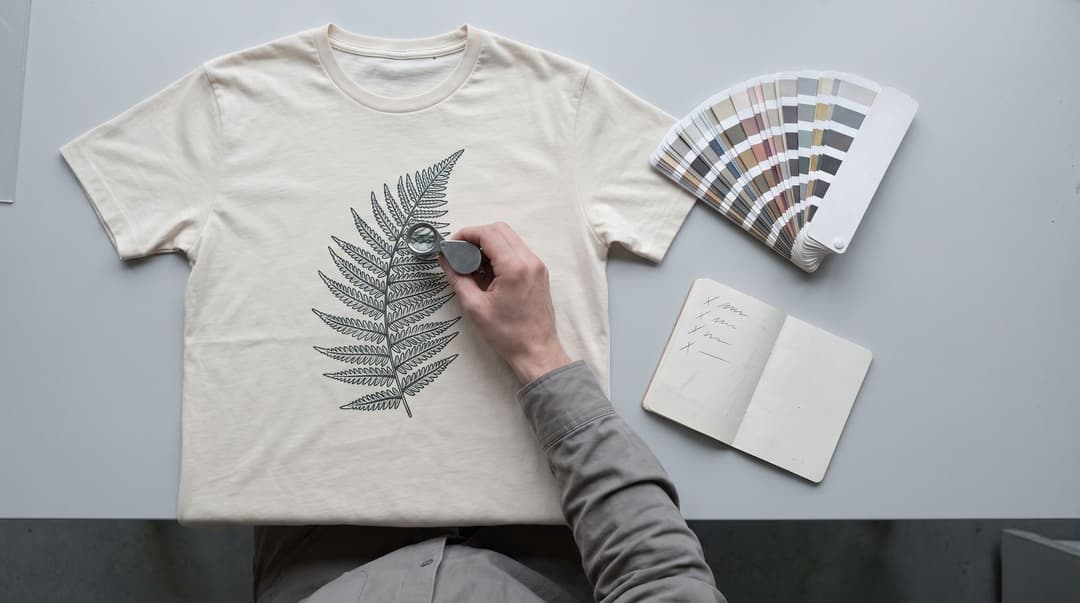
To provide a fair and useful comparison, we evaluated each platform against four core criteria that matter most to an Etsy seller. These standards form the basis for our analysis, ensuring each service is measured on the same terms.
- Etsy Integration Quality: A seamless print on demand Etsy integration is fundamental. We assessed how easily each platform connects to an Etsy store, the reliability of automated order syncing, how it handles product variants like size and color, and whether it pushes shipping and tracking information back to Etsy automatically. A poor integration creates manual work and risks errors.
- Product Catalog & Quality: The appeal of your Etsy shop depends on what you sell. We looked at the breadth and depth of each platform’s product catalog, from apparel and wall art to more niche items. Equally important is the consistency of print quality. Our evaluation draws on each platform’s published specifications and help documentation, and on the consistency of seller-reported results; ordering your own samples remains the only way to judge the product your customer will receive.
- Fulfillment & Shipping: Fulfillment time is the period between an order being placed and it being shipped. We assessed the average production speed of each service. We also considered the location of their fulfillment centers, as a globally distributed network can lead to faster shipping times and lower costs for international customers, a key advantage on a global marketplace like Etsy.
- Base Costs & Profit Margins: Your profit is what’s left after all costs are paid. We analyzed the base cost of products on each platform, as this is the largest determinant of your potential profit margin. Value for money is key, weighing the cost against the quality of the product and the reliability of the service.
The 5 Best Print-on-Demand Platforms for Etsy Compared

Here is our breakdown of the top five POD platforms for Etsy sellers in 2026, measured against the criteria above.
1. Printify
Best for: Sellers who want the widest product selection and most competitive pricing.
Printify operates as a marketplace, connecting sellers with a vast, distributed network of print providers. This is its core strength and its primary trade-off. The platform offers an enormous catalog of over 2,000 products, often at lower base costs than its competitors, which allows for higher profit margins. The direct Printify–Etsy integration is well-regarded and straightforward, with features to help manage products from multiple suppliers.
However, quality and fulfillment times can vary from one print provider to another within the network. While Printify provides a rating system for its partners, the seller bears the responsibility of choosing the right supplier for their needs and managing that relationship. This means sample ordering is especially critical to ensure consistency. You can find detailed instructions in Printify’s Etsy integration guide.
Pros:
- Massive product catalog with competitive base prices.
- Flexibility to choose from multiple print providers for the same product.
- Paid “Premium” plan can further reduce product costs for high-volume sellers.
Cons:
- Print quality and fulfillment speed can be inconsistent across different suppliers.
- Customer support issues are sometimes routed through both Printify and the specific print provider, adding a layer of complexity.
Verdict: Printify is an excellent choice for sellers who prioritize choice and want to maximize their profit margins. The trade-off is that it requires a more hands-on approach to vetting suppliers and managing quality.
2. Printful
Best for: Sellers who prioritize consistent quality, branding options, and an all-in-one user experience.
Printful operates on a vertically integrated model, meaning it handles almost all production and fulfillment in-house at its facilities across the world. This approach gives it a high degree of control over the entire process, resulting in reliable print quality and consistent fulfillment times. The Printful–Etsy integration is one of the most robust available, offering a smooth and intuitive experience from product creation to order processing.
This control and consistency come at a cost. Printful’s base prices are generally higher than those found on Printify, which can squeeze profit margins. However, the value is present in its premium features, such as custom branding options (like inside labels and pack-ins) and high-quality product mockups. Its user-friendly mockup generator is a key strength. We cover the full integration in Printful’s Etsy integration help center.
Pros:
- High and consistent print quality due to in-house fulfillment.
- Excellent branding options to create a professional customer experience.
- User-friendly interface and a reliable, feature-rich Etsy integration.
Cons:
- Higher base costs can result in lower profit margins.
- Product catalog is extensive but not as vast as Printify’s marketplace.
Verdict: Printful is ideal for sellers who are building a brand and are willing to pay a premium for consistency, quality, and a seamless user experience. It’s a “set it and forget it” solution in many respects.
3. Gelato
Best for: Sellers targeting a global audience who need localized, eco-conscious production.
Gelato’s primary differentiator is its hyper-local production network, with over 100 partners in more than 30 countries. When an order comes in from Etsy, Gelato automatically routes it to the production hub closest to the end customer. This model significantly reduces shipping times and costs for international orders and lowers the overall carbon footprint, which can be a strong selling point for an eco-conscious brand.
Its product catalog is more curated than Printful’s or Printify’s, with a strong focus on wall art, mugs, and core apparel items. The quality is generally consistent, as Gelato vets its production partners carefully. Its direct Etsy integration handles order syncing and fulfillment updates automatically. The trade-off is a smaller product selection compared to the market leaders.
Pros:
- Vast global network for faster, cheaper, and greener international shipping.
- Strong focus on sustainable, localized production.
- Reliable quality from a curated list of print partners.
Cons:
- Product catalog is less extensive, particularly in niche apparel or accessory categories.
- Some sellers may find the pricing structure more complex.
Verdict: Gelato is the clear choice for Etsy sellers with a significant international customer base or those who want to build their brand around sustainability and fast global shipping.
4. Gooten
Best for: Sellers looking for unique product categories and managed fulfillment.
Gooten operates a model similar to Printify but focuses on a more curated network of vendors. Its strength lies in its diverse and sometimes unusual product catalog, which includes a wide range of home goods, pet products, and fashion accessories that are not always available elsewhere. This allows an Etsy seller to stand out in a crowded marketplace with unique items.
The platform’s Etsy integration is functional and automates the core tasks of order fulfillment. Gooten acts as a more direct partner than a pure marketplace, managing the vendor relationships for you. The main weakness is that its user interface and pricing can feel less transparent or intuitive than competitors like Printful. Pricing in particular is shown only after login, so comparing costs takes more effort than on platforms with public catalogs.
Pros:
- Access to a unique and broad range of products, especially in home decor.
- Curated network of manufacturers provides a degree of quality control.
- Managed relationship with vendors simplifies the process for sellers.
Cons:
- User interface can be less straightforward than its competitors.
- Fulfillment times can be less predictable than a vertically integrated service.
Verdict: Gooten is worth considering for sellers who want to build a store around distinctive products beyond standard t-shirts and posters, and who value a managed approach to production.
5. Prodigi
Best for: Artists and sellers focused on premium fine art prints and high-quality products.
Prodigi has built its reputation on one thing: exceptional print quality. It is a UK-based company with a global reach, specializing in museum-quality giclée prints, canvases, and photo products. For artists, photographers, and illustrators selling their work on Etsy, Prodigi offers a level of color accuracy and archival quality that is hard to match. Their focus is on delivering a premium product.
This specialization means its catalog of other items, such as apparel, is more limited. Its base costs are also at the higher end of the market, reflecting the premium materials and processes used. The bigger caveat for this list: Prodigi has no direct Etsy integration. Sellers either submit Etsy orders manually or by CSV upload, or run a Shopify store synced to Etsy through a third-party app and let Prodigi fulfill from Shopify. That extra step is manageable for a small shop with a handful of print orders a week, and the platform is clearly geared towards sellers for whom print quality is the absolute top priority and whose customers are willing to pay for it.
Pros:
- Exceptional, industry-leading print quality, especially for fine art.
- Global fulfillment network specialized in high-quality goods.
- Eco-conscious, with options for sustainably sourced paper and wood.
Cons:
- Higher base costs reflect its premium positioning.
- Limited catalog outside of prints, wall art, and a few core products.
Verdict: For artists whose brand reputation rests on the quality of their prints, Prodigi is arguably the best choice. It is a specialized tool for a specific, quality-focused segment of the Etsy market.
Key Considerations for Etsy Sellers

Regardless of which POD partner you choose, success on Etsy requires understanding its specific rules and financial realities.
- Disclosing Production Partners: Using print-on-demand is fully compliant with Etsy’s policies, but it requires transparency. You are not making the items by hand, so you must disclose your fulfillment partner in your listings. This is a simple step in your Etsy settings where you add the name of the company producing the items. You must list your provider according to Etsy’s policy on Handmade products.
- Calculating True Profit Margins: Your final profit isn’t just your retail price minus the POD company’s base cost. You must also account for shipping fees charged by the POD partner and, crucially, Etsy’s own fees. To calculate your final profit, you must account for all of Etsy’s fees and payments policy, which, as of October 2026, include a listing fee, a transaction fee, a payment processing fee, and potential Offsite Ad fees. Always factor these into your pricing strategy.
- Managing Customer Service: Your print-on-demand partner handles production and shipping, but you remain the owner of the customer relationship. All communication, questions about order status, and support requests will come to you through Etsy. If there is a problem with production or a shipping delay, it is your responsibility to communicate with your POD partner and provide updates to your customer. Your shop’s reputation depends on your ability to manage this process effectively.
Conclusion
Choosing the best print-on-demand for Etsy in 2026 is about identifying the right set of trade-offs for your specific business. There is no single platform that wins on every metric, so the ideal choice depends on your priorities.
The decision comes down to your core strategy. Printify offers maximum choice and the potential for higher profit margins, but requires more active management. Printful provides unmatched consistency and branding at a higher base cost. Gelato excels for sellers with a global audience, while Gooten opens up unique product categories, and Prodigi serves the premium art market.
By evaluating these platforms against your business goals, you can build a reliable and profitable print-on-demand store on Etsy.
FAQ
Do I have to disclose my print-on-demand partner on my Etsy listings?
Yes, Etsy's policy requires you to name any production partners you work with in your listings to maintain transparency with buyers.
Can I use more than one print-on-demand service for my Etsy store?
Yes, you can connect multiple POD services to a single Etsy shop, but it adds complexity to managing orders and shipping profiles.
Who handles customer service for POD orders on Etsy?
You, the seller, are always responsible for communicating with your customers, even if the issue relates to production or shipping by your POD partner.
How do I handle returns for print-on-demand products?
Return policies depend on the POD provider; most only offer reprints or refunds for quality issues, not for buyer's remorse, so your Etsy policy must reflect this.
Keep reading
- The Best Print-on-Demand Platforms for Etsy in 2026
Searching for the best print on demand for Etsy? We compare Printful, Printify, Gelato and more on integration, quality, and real profit margins for Etsy sellers.
- Best Print-on-Demand for Stickers: 5 Platforms Compared
Searching for the best print on demand for stickers? We compare Printful, Printify, Gelato, and more on product range, print quality, base cost, and integrations.
- Best Print-on-Demand for Shirts in 2026: 6 Suppliers Compared
Find the best print on demand shirts supplier for your brand in 2026. We compare Printful, Printify, Gelato, and more on print quality, pricing, and catalog depth.