Best Print-on-Demand for Greeting Cards & Calendars in 2026
Find the best print on demand for greeting cards and calendars in 2026. We compare Printful, Printify, Gelato, and more on print quality, paper stock, and pricing.
· 8 MIN
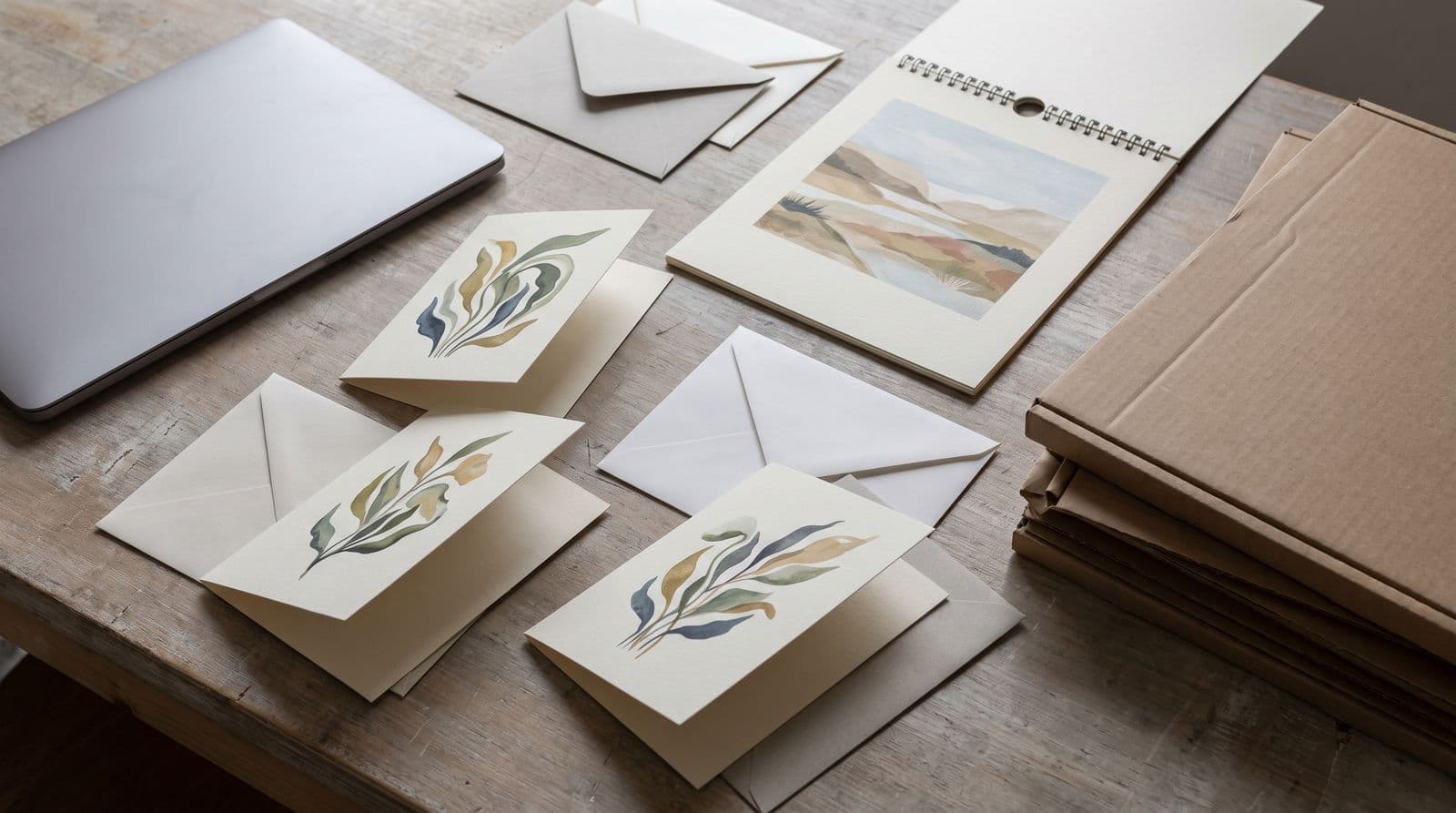
Custom greeting cards and calendars represent a significant opportunity for artists, photographers, and entrepreneurs. Unlike apparel, where fit and fabric are key, these paper goods are judged on print vibrancy, paper quality, and finishing details. Choosing the right partner is critical, as not all print-on-demand (POD) platforms are equally suited to high-quality stationery.
This article provides a head-to-head comparison of leading platforms to help you find the best service for your business. We evaluate each provider against a consistent set of criteria focused specifically on the demands of selling custom greeting cards and calendars. We outline the criteria, present the findings, and help you pick the platform that fits your brand’s priorities.
(Disclosure: This site is part of the Printful family of companies. We review Printful by the same standards we apply to every other platform, and our primary goal is to provide a fair and useful comparison for creators.)
The Verdict: Top POD Platforms for Cards & Calendars
For readers who want the key takeaways first, here is our summary verdict. Each platform presents a different set of trade-offs between variety, quality control, and global reach. The best choice depends entirely on your business goals, whether that is offering the widest selection, ensuring brand consistency, or prioritizing sustainable, localized production.
On balance, based on what each platform publishes, sellers looking for premium, fine-art quality paper goods should look toward Prodigi, while those who need an extensive product catalog will find the most options with Printify. Printful offers the most integrated experience with strong branding tools, and Gelato leads for sellers focused on global, eco-conscious fulfillment.
| Platform | Greeting Card Options | Calendar Options | Key Strength | Best for... |
|---|---|---|---|---|
| Printful | Good (three sizes, bulk pricing) | Limited (wall calendar) | In-house quality control, branding tools | All-in-One Service & Branding Tools |
| Printify | Excellent (Multiple sizes, finishes) | Good (Wall, desk) | Vast supplier network, competitive pricing | Product & Price Variety |
| Gelato | Very Good (Multiple sizes, eco paper) | Good (Wall, desk) | Global network, sustainable production | Eco-Conscious Brands & Global Reach |
| Prodigi | Excellent (classic and fine-art papers) | Good (A4 and A5 wall calendars) | Premium print quality, specialist papers | Premium Quality & Fine Art Sellers |
Our Review Criteria Explained
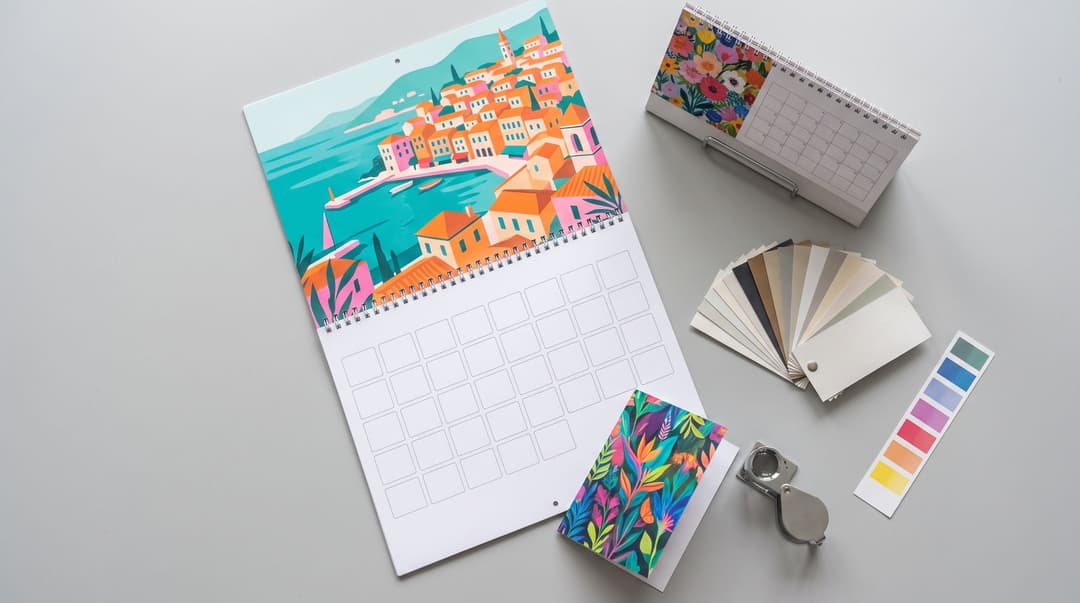
To provide a fair and useful comparison, we evaluated each platform against four criteria that are critical for successfully selling print-on-demand greeting cards and calendars. These benchmarks form the basis of our analysis and recommendations.
1. Product Range & Customization This criterion assesses the variety of available products. For greeting cards, we look at the range of sizes, fold types (e.g., folded, flat), and paper stocks, including finishes like matte, glossy, and silk. For calendars, we evaluate the availability of different formats such as wall calendars and desk calendars, as well as binding options like spiral coil or saddle-stitch. A wider range allows sellers to cater to more niche markets and create unique product offerings.
2. Print Quality & Color Accuracy For paper goods, print quality is non-negotiable. We weigh the paper stocks and print methods each platform publishes, and we recommend you order samples to judge sharpness, color richness and accuracy against your original file. This includes considering how platforms handle color profiles (sRGB for digital screens vs. CMYK for print) and whether their print outputs are consistently vibrant and true to the source.
3. Base Cost & Profit Margins Profitability is determined by the base cost of the product, platform subscription fees (if any), and shipping rates. We look at how each service's pricing structure affects a seller's potential profit margin. A lower base cost is appealing, but it must be weighed against print and paper quality; value for money is the balance of the two.
4. Integrations & Mockup Tools Seamless operation depends on how well a POD platform integrates with e-commerce storefronts like Shopify, Etsy, or WooCommerce. We assess the reliability and ease of use of these integrations. Additionally, we evaluate the quality of the platform’s mockup generator. High-quality, realistic mockups are essential for marketing and sales, as they allow customers to visualize the final product before purchasing.
In-Depth Platform Comparisons

Here we apply our criteria to each platform, examining the specific strengths and weaknesses of Printful, Printify, Gelato, and Prodigi for selling custom stationery.
Printful
Printful operates with a vertically integrated model, handling all printing and fulfillment in-house at its global facilities. This approach offers a high degree of consistency in print quality and service.
Pros:
- Consistent print quality and color reproduction across all orders.
- High-quality mockup generator and intuitive design tools.
- Branding options like custom packing slips are included.
- Bulk price calculator for larger card quantities.
Cons:
- Product range for calendars is limited compared to competitors.
- Base costs can be higher than on marketplace-style platforms.
Printful’s strength is its reliability. Because production is handled in-house, the quality of greeting cards is consistent, which is a major advantage for brand-conscious sellers. Its focus is a curated selection of popular formats: greeting cards in three sizes with bulk pricing for larger runs, and a wall calendar for the coming year. The trade-off is a smaller selection, particularly for calendars.
Printify
Printify is a print-on-demand network aggregator. It connects sellers with a large, distributed network of third-party print providers. This model provides immense choice but introduces variability.
Pros:
- Extensive catalog with numerous card and calendar styles from different suppliers.
- Competitive base costs, allowing for potentially higher profit margins.
- Sellers can choose a print provider based on price, location, or ratings.
Cons:
- Print quality and fulfillment times can vary between suppliers.
- Managing orders from multiple providers can add complexity.
The core trade-off with Printify is choice versus consistency. The platform gives you access to a wide array of options; its greeting card and calendar pages show formats from different print providers at various price points. This allows you to find products with specific paper weights or finishes that other platforms may not offer. However, since each supplier operates independently, it is essential to order samples to verify quality before committing to a specific provider.
Gelato
Gelato also uses a distributed network of printers but with a focus on localized, sustainable production. It automatically routes orders to the print hub closest to the end customer, reducing shipping times and carbon footprint.
Pros:
- Vast global network with printers in over 30 countries.
- Strong focus on sustainability with FSC-certified paper options.
- Localized production often leads to faster shipping.
Cons:
- Fewer niche product variations than a platform like Printify.
- Mockup tools are functional but less advanced than some competitors.
Gelato’s model is compelling for sellers with an international audience and an eco-conscious brand identity. Gelato emphasizes sustainability, offering locally produced cards and wall calendars that cut shipping distances. While its overall product catalog may not be as deep as Printify's, its selection of greeting cards is strong, and the quality from its network of vetted print partners is generally reliable.
Prodigi
Prodigi positions itself as a premium print-on-demand solution, targeting artists, photographers, and brands that require gallery-quality reproduction. Its focus is on superior materials and print fidelity.
Pros:
- Exceptional print quality, ideal for fine art and photography.
- Offers premium and specialist paper stocks, including textured fine art papers.
- Global fulfillment capabilities with a focus on quality control.
Cons:
- Base costs are higher, reflecting the premium quality.
- The product catalog is more curated and less expansive than others.
For sellers whose primary concern is quality, Prodigi is worth considering. The platform specializes in high-end reproduction, and its greetings cards come in a classic range and a fine-art range on textured papers, so a card can feel like a small art print. Its wire-bound wall calendars come in A4 and A5, dated or undated. This premium focus comes at a higher base cost, making it better suited to the higher end of the market.
Setting Up Your Store: Key Considerations
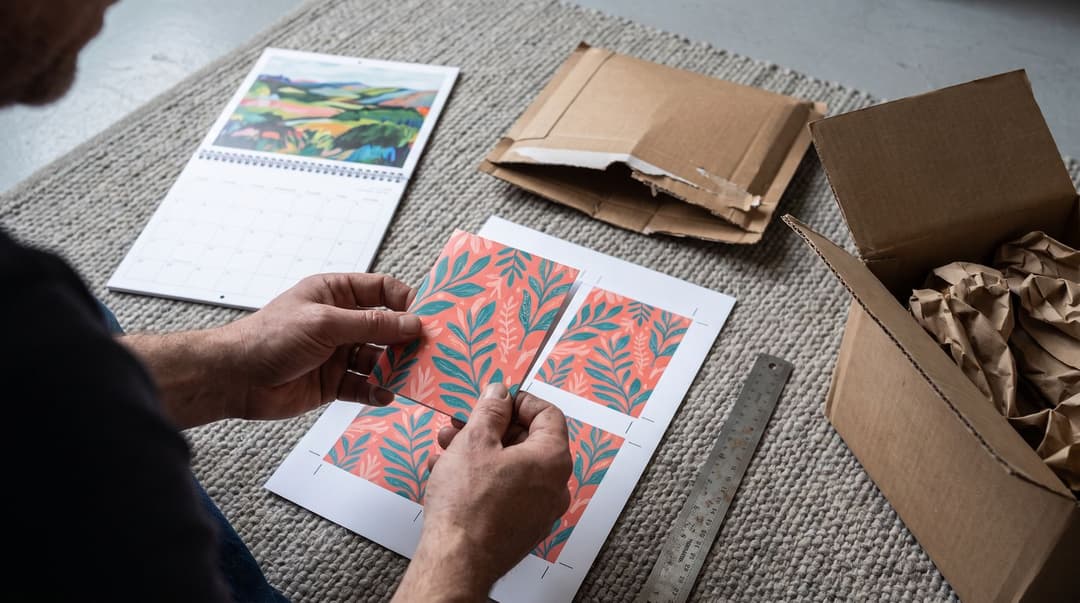
Once you have selected a platform, a few key steps will ensure your products meet customer expectations.
First, always order samples. This is the only way to physically inspect the paper stock, print quality, and color accuracy before you list the product for sale. What looks good in a digital mockup may feel different in hand.
Second, pay close attention to design file requirements. Ensure your artwork uses the correct dimensions, includes a bleed area to avoid white edges after trimming, and is saved at a high resolution (typically 300 DPI) for crisp printing. The principles for designing high-quality paper goods are similar to those covered in our guide to print-on-demand for books & journals, where file resolution and color profiles are critical for a professional result.
Finally, be mindful of seasonality and fulfillment time. Calendars are a time-sensitive product, and greeting card demand spikes around holidays. Plan your product launches and marketing campaigns well in advance, and be aware of your chosen provider's production and shipping timelines during peak seasons.
Conclusion
Choosing the best print-on-demand platform for greeting cards and calendars involves balancing specific priorities. There is no single provider that universally outperforms all others; the right partner is the one whose strengths align with your brand’s needs.
On balance, the decision comes down to a clear set of trade-offs. Printify offers the greatest variety in products and pricing, making it ideal for sellers who want maximum choice. Printful provides consistency and strong branding tools for those who prioritize a reliable, all-in-one service. Gelato is the leader for eco-conscious brands with a global customer base, thanks to its localized production model. For artists and photographers demanding the highest print fidelity, Prodigi’s premium offerings are the strongest option.
By evaluating each platform against your specific goals for quality, variety, and profitability, you can confidently build a successful line of print-on-demand greeting cards and calendars.
FAQ
What is the best paper for print-on-demand greeting cards?
This depends on your art style. Matte stocks offer a natural, uncoated feel ideal for illustrations. Silk or gloss finishes make colors pop and are better for photographic designs. Always check the paper weight (measured in gsm) to ensure a thick, high-quality feel.
Can I sell packs of greeting cards?
It depends on the provider. Some Printify print providers list greeting cards in packs of 10, 30 or 50, while Printful sells single cards with a bulk price calculator for larger quantities. Elsewhere you may need to bundle single items in your store.
How do I price my POD greeting cards?
To set your price, start with the platform's base cost for the card and add the estimated shipping fee. Then, add your desired profit margin. It is also wise to research what similar cards sell for on your target marketplace, such as Etsy, to ensure your pricing is competitive.
Keep reading
- Best Print-on-Demand for Hats & Embroidery in 2026
Searching for the best print-on-demand hats and embroidery service? We review 8 top platforms on catalog, quality, and pricing to help you choose the right partner for 2026.
- Best Print-on-Demand for Mugs in 2026: 4 Platforms Compared
Looking for the best print on demand for mugs in 2026? We compare Printful, Printify, Gelato, and Gooten on mug variety, print quality, and profit margins.
- Gelato Review 2026: Pricing, Quality & Our Verdict
A complete Gelato print on demand review for 2026. We cover pricing, product quality from our tests, and shipping speeds to help you decide if it's worth it for your store.